For this assignment, we went to two brutalist buildings here in London, the Royal Festival Hall and the Barbican social housing complex. Both buildings were interesting because they lacked any ornamentation like the buildings we saw in Vienna with the secessionist and historicist movement. This was especially intriguing because the British had borrowed the idea of social housing from Red Vienna as there was an influx of Viennese into London during the 20th century.
Looking at the buildings now, what is eye catching is not only the simple facade in comparison to the glass buildings and ornate stone work from past and contemporary styles but also the environment that the buildings foster.
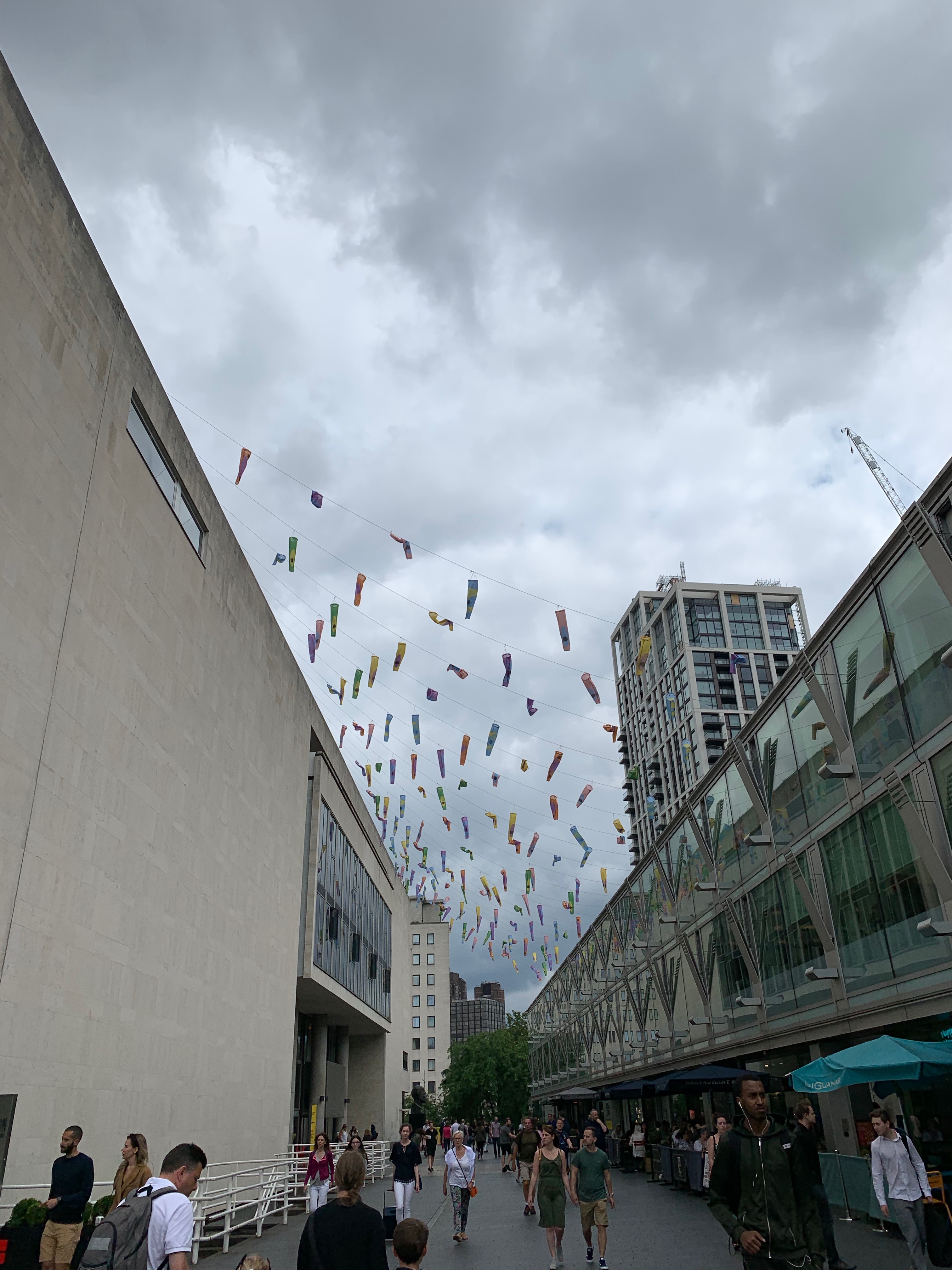
We had walked into the Royal Festival Hall not knowing what to expect. Looking around the building, there were these hanging lanterns in the sky. The building was made of mixed concrete and several levels. A kid was running alongside us with a twirling multicolored ribbon in his hand, showing the festival happening outside of the hall a little bit. When we walked in, there was a complete lack of designated space, everything was fluid. Something that caught my eye was how the floor was shifting its height as to create platforms throughout the first floor. There were also pseudo lower floors a couple stairs down creating the illusion of space.
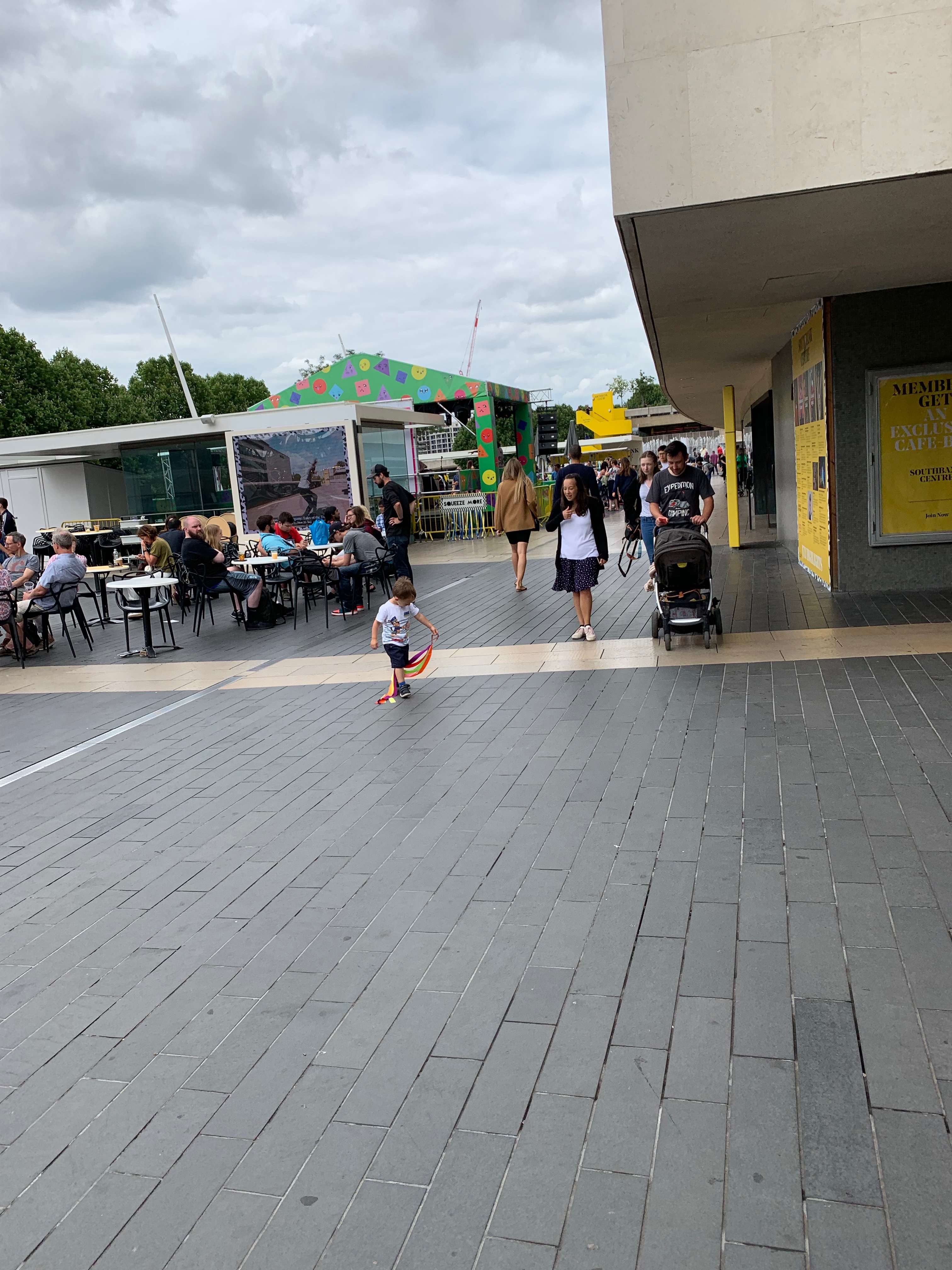
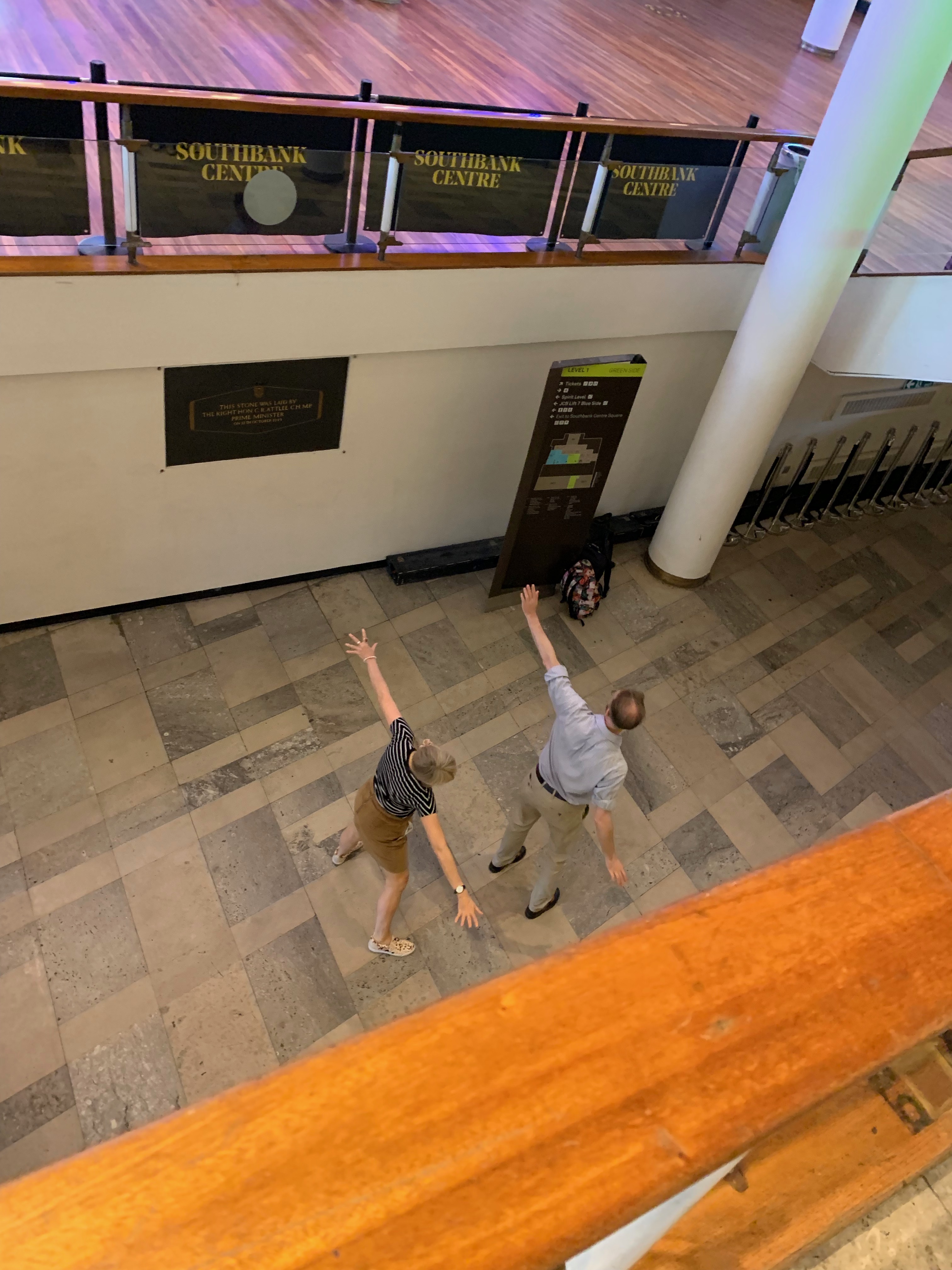
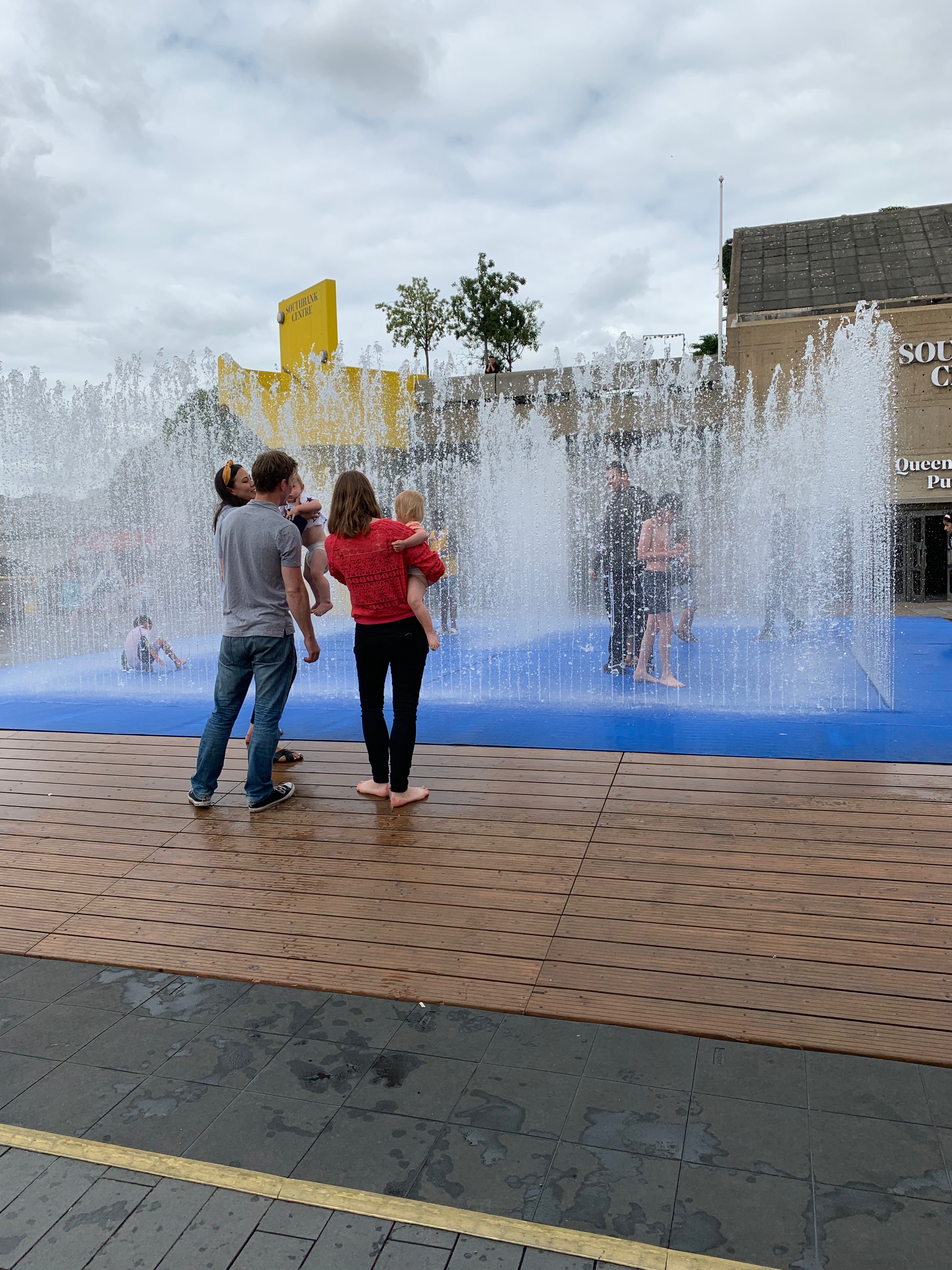
There was so much life in this building; it felt like air to walk through the building and see the hundreds of things happening. Peering over the ledge to a lower floor, I saw an older couple practicing a ballroom set. There were people bustled around the cafe area drinking coffee, working, and chatting with their friends. What was more fascinating was the festival outside, supposedly for pride. Children were at the floor of a concert, where an emphatic dj was playing out techno beats while the kids, with ribbons in hand, tried to hula hoop. There was also a water feature with water shooting out of holes in easily planned and followed formations where the kids would run between making sure not to get wet.
Looking at this space is interesting, especially in the context of the spectacle. Adrian Forty described in the Unknown City how “in its efforts to reintroduce “experience” back into architecture, what has tended to appear is the simulacrum of experience: a spectacle, presented in literary or cinematic terms.” This spectacle becomes an outward celebration of the place, not just the building but the people who inhabit it.
The Barbican had a similar act of spectacle. Though not a festival hall, the building now has become a gentrified hub for communal activities. The complex center was somewhat elusive; there were many streets and corridors where we could have gotten lost if we didn’t have navigation. The center itself was magnificent. Greenery everywhere, I had never seen anything like it. What was especially interesting was how the people congregated around the water, even though it had become solid from the lack of proper filtration.
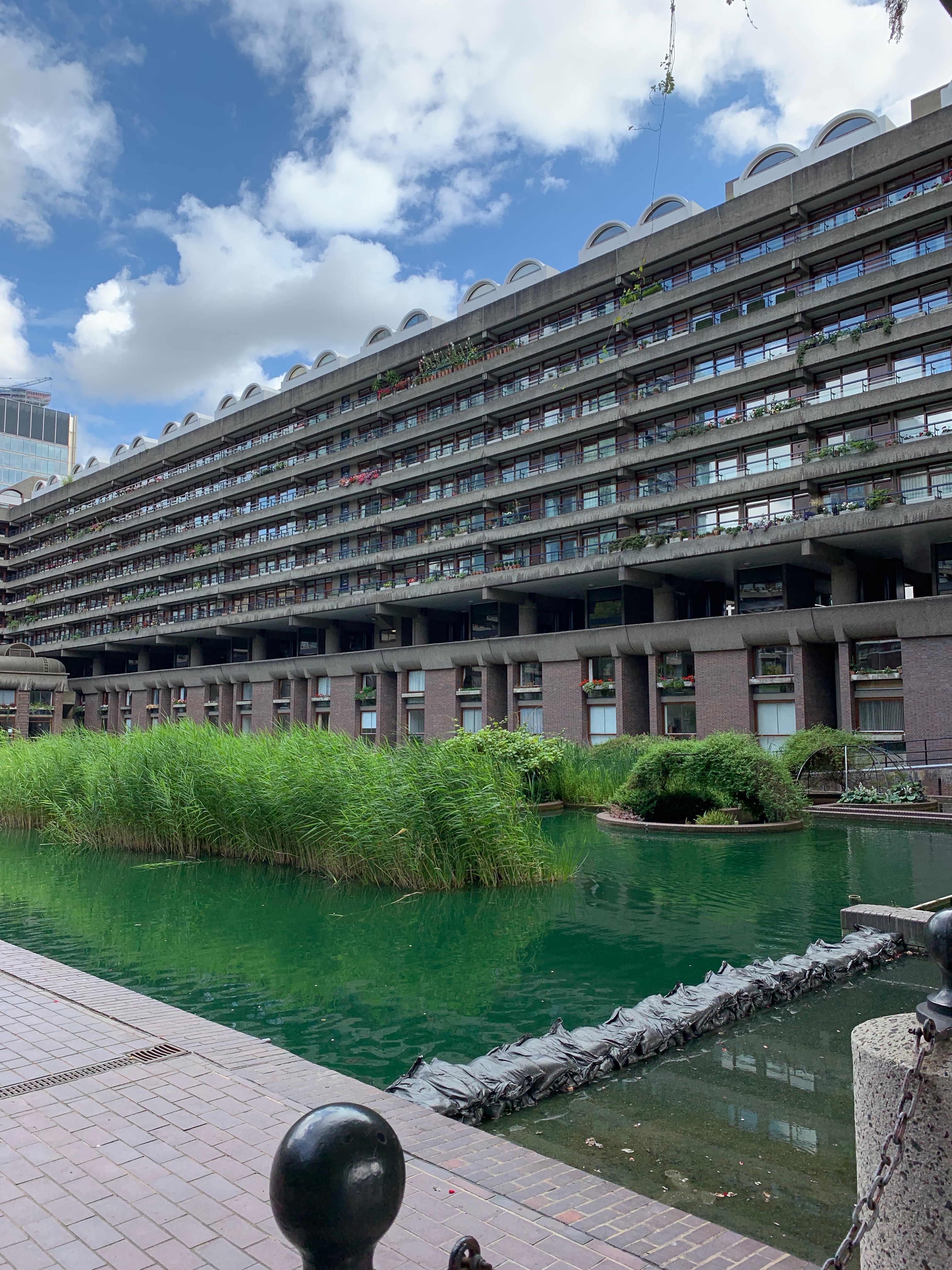
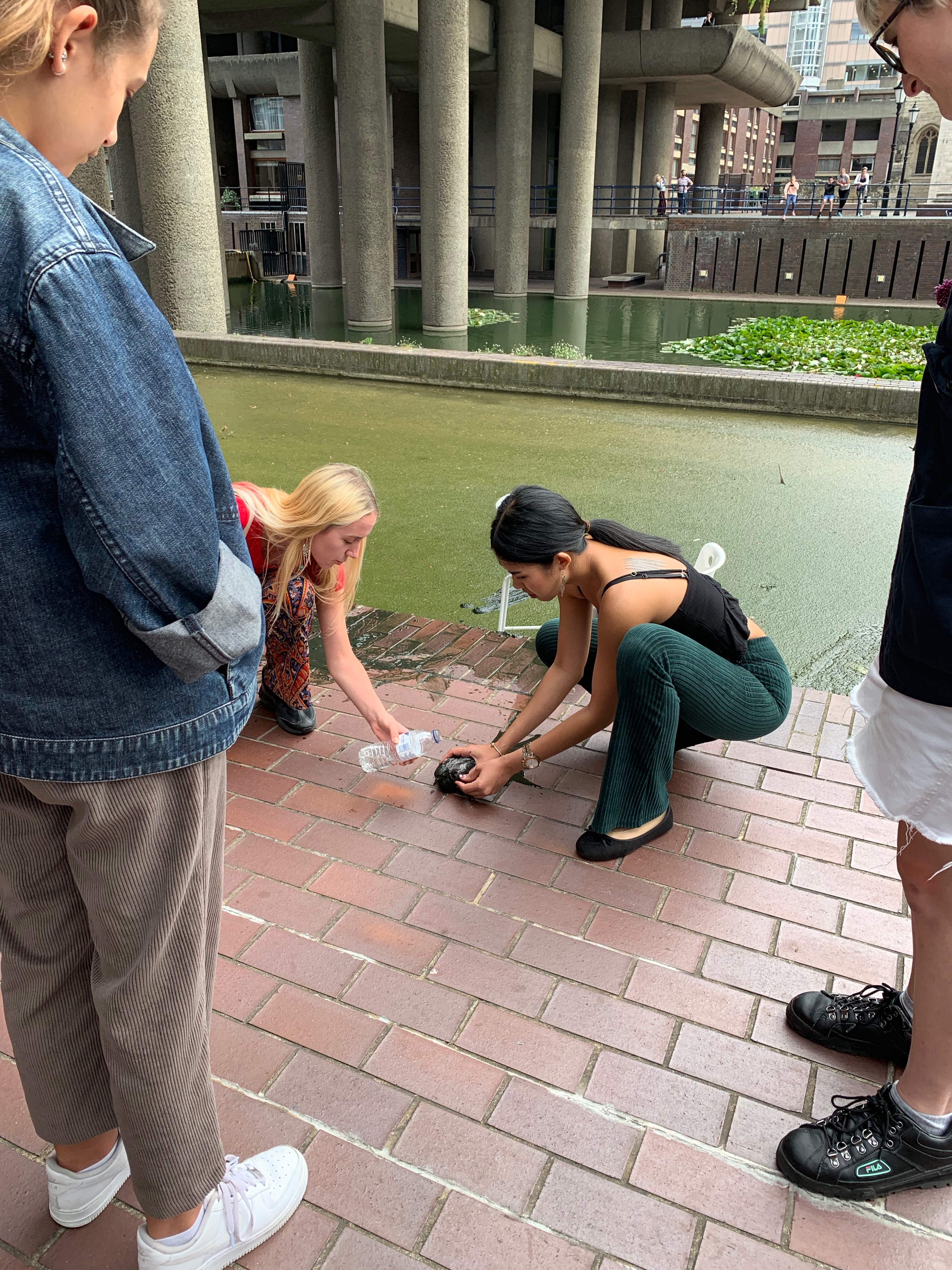
When we were there, a bird actually got stuck in the sludge and an entire group of people worked to clean the sticky debilitating material off of the bird. It was a sign of humanity and life within the community still thriving. There was still a feeling of the spectacle, the capitalization of the space for the community. But, the fact that it was gentrified, the prices skyrocketing in the area, was somewhat disheartening because that act took away the ability for lower income people to experience a sense of community and inclusion. This might be a further sign of the ongoing perseverance of classism in the country.
Overall, it was interesting to see the translation of simplistic architecture into a communal experience to cherish. But, I feel it important to ask how and why this came about. Why would people gravitate towards these buildings when there is no unnecessary aesthetic value? I find that people appreciate these buildings because of their difference and access. The aesthetic buildings, like the monuments of this country, seem out of reach for people. Especially in the past, it was harder for lower class citizens to access or educate themselves with the tools necessary to properly appreciate the architecture. But, both the Barbican and the Royal Festival Hall functioned as a method to educate the public about the arts and the community associated with it.
 Ananth Abroad