Capstone Project

Part 1

Visiting and living in both Vienna and London gave a glimpse into the magnitude of time and a connection between history and culture. The classes specifically tailored my sight towards the effects of erasure on the madness of the city. The two cities had a significant amount of madness present throughout history yet it is not a topic discussed by the public. There is first the idea of memorialization of the past, creating a glorified, idyllic image to stimulate a feeling of nationalism and forget the madness present in the history. There is also a connection between the erasure and capitalism and how even the act of shame becomes a method to capitalize on and in turn memorialize the history. These two points will be furthered within the scope of this work. 

The two cities we visited during our time abroad both had an interesting lens towards the past. As we learned in the first days of class, there was a large shift in Vienna towards the end of the Habsburg rule, “a shift towards the internal” as described by Bettelheim in his work Freud’s Vienna. This shift created two distinct paths of thought which were both described in the classes indirectly: madness and historicism. Yet, interestingly, the act of historicism seems to erase the investigation of madness or psychosis. Specifically, the guided tours of the imperial palaces, the Sisi Museum all served to memorialize the Habsburg empire and the general social atmosphere in Vienna. 

All the guided tours focused on the power of the empire, creating a sense of false reality. Seeing Maria Theresa’s birthing bed reminded me specifically of the spectacle or facade of power that was put for the public. As Loos detailed in Ornament and Crime, the ornamentation became a way to distract the public from the humanity of the royal families and in turn their own national crises. I remember the Sisi museum also participating in this exact action; the exhibits created an elysian nostalgia that was not present in the very tumultuous and disturbing life of Sisi. The queen suffered from depression, anxiety, and an eating disorder. However, the tours all focused on her beauty and fame. I found it especially interesting how one of the exhibits in the museum talked about how Sisi’s fame really came after she died. Her character was written into the media through films and shows depicting her as a classical heroine trope, a symbol of grace and beauty personified in a mutually romantic and royal relationship. This, in effect erased her madness and replaced it with an idealized memory. Figure 1 shows an advertisement of her character in the media following her death. Her image became the symbol of the country and even the face of one of the most famous bakeries in Vienna, as seen in Figure 2, which one of our first tour guides in Vienna had a bag of. Furthermore, the silverware museum that we had visited put to focus something that again changes the focus onto something ornate and superficial rather than honest. This erasure, though not through architecture, informs the idea of memorialization through social change. Though there is no malintent, there is always a subconscious erasure of past moments of shame. The case of the Sisi museum and the tours of the imperial families depict that perfectly.

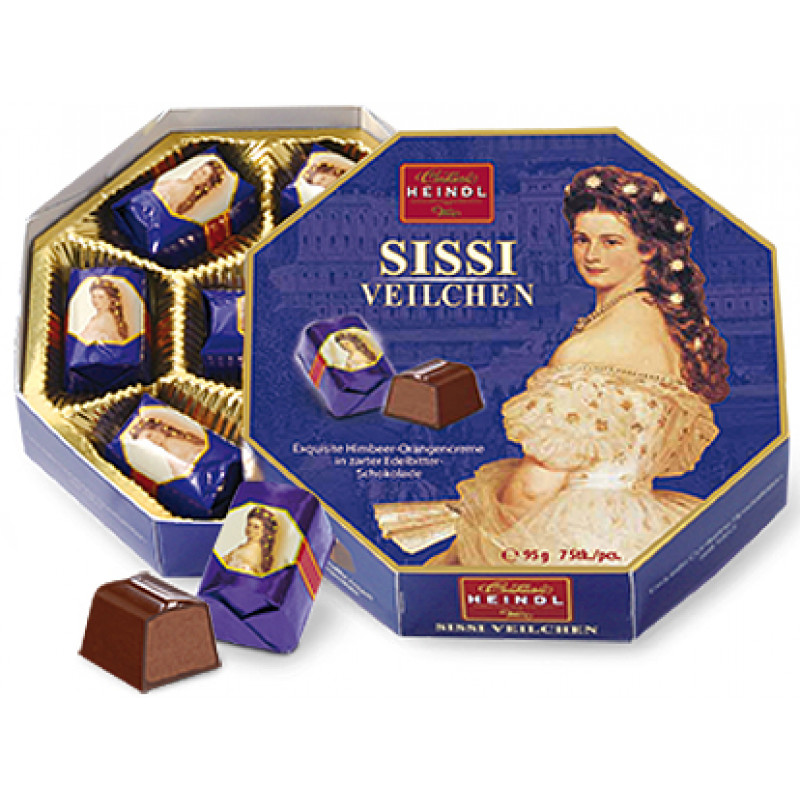
Figure 1. DVD advertisement Figure 2. Sissi Chocolate

Though this act of memorialization was present in London, what struck me more was the influence of capitalism into the erasure of madness in the city. Looking at the Liverpool Train Station and also the slew of large glass buildings making up the newest part of the city, the financial district, I could see the implicit corporate drive of the city, especially through the act of erasure. 

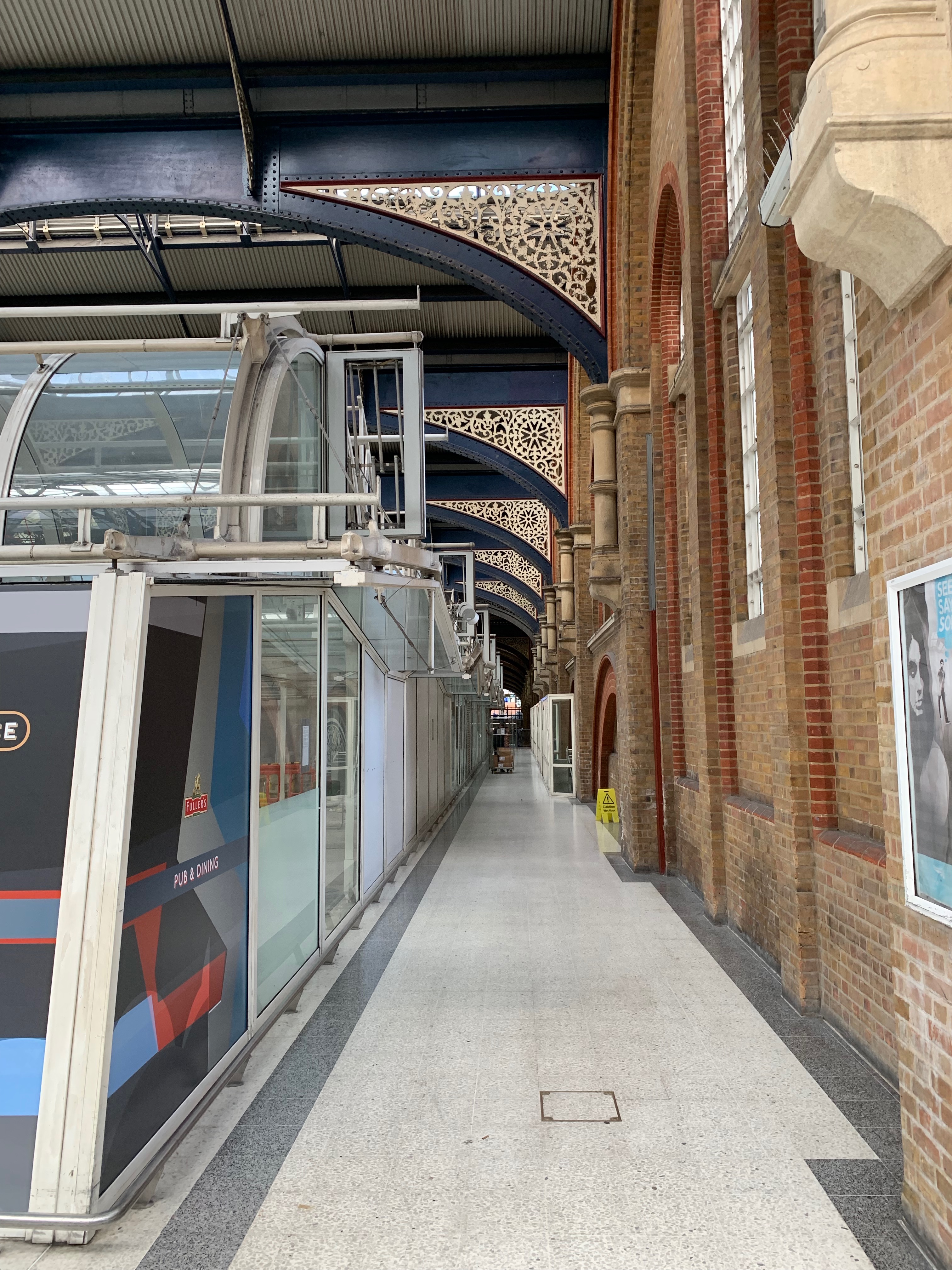
Even upon first glance, the Liverpool train station had caught my eye. The stark contrast between the facade of the building and the interior confused me. The space within the building itself was extremely large with a glass ceiling to make the space feel even bigger (shown in Figure 3). The train station within it was a functioning and contemporary space. At first, I found it interesting how there were multiple commemorative aspects to the space. We had seen a plaque for World War II veterans on the inside and we had also seen an engraved sign outside saying that the building used to be the Bethlehem Hospital, a mental institution for people with disorders. Besides the location of the two commemorative plaques being confusing, the signs begged the question of how we can properly notice and remember the past without participating in any form of erasure in the process. In discussing this building, I had come to the conclusion that the building functioned as an indirect form of nationalism and memorialization. Through the act of commercialization, there is an erasure of the past culture. Unlike the historicism described in the tours of palaces and museums, the train station functioned as a living, breathing memorialization of the progress and power of the city as it reinvented something “negative” into a place of meeting and consuming. 

Figure 3. Liverpool Train Station

This presence of capitalism in erasure can also be seen in the financial district that we had visited. The large, seemingly never ending glass buildings cascaded up in every direction, making me feel very small. The afterthought of the communal space again emphasized both the function of the buildings and the importance of finance in the city. Standing in the communal space looking at the buildings felt similar to the historicism present in Vienna, a display of British contemporary wealth. Moreover, we had discussed how the buildings in this district could be put into any metropolitan area and look in place. The architecture of the buildings redefined the English culture to something different than what it was in the past.

To me, the topic of capitalism in relation to erasure does not effectively encapsulate the connection between the cities’ act of erasure and madness. However, this technicality can be better amended through the scope of time and social movement. Specifically, we can look at Carl Jung’s idea of the collective unconscious to understand. Jung described in his text The Concept of Collective Unconsciousness how there are archetypes, definite forms in the psyche that are ever present and passed through hereditary, which inform a collective understanding of social movement. In context, the act of erasure is a “pattern of instinctual behavior” that can be seen through the analysis of the mentioned buildings — the act of erasing the madness or taboo to make room for something better for the present society. This is an especially interesting perspective towards erasure and madness with Jung’s idea of the shadow, defined in Archetypes as “a moral problem that challenges the role ego-personality.” The shadow is also an archetype but on an individual level. However, it makes sense that in understanding the motivated erasure of madness in these two cities, it is impossible to be able to understand and live with the shadow of collective madness. Thus, through the instinct of commercialization, the shadow of collective madness is ignored and the society progresses, continuing to value only the positive and redefine the cultural norm. 

With Jung’s idea of the shadow in mind, we can say that in the short term, society’s decisions are guided by a capitalist lens; but through the process of change, there is an unconscious erasure of the past, whether it is motivated or not. This erasure can be seen as a grasp for control. Through the memorialization of the past and emphasis on the corporation in the present, the city unconsciously aims to define itself through only the positive point of view and in turn control the discussion. 

This idea is somewhat ironic because madness in its most commonplace definition is the lack of control. But, looking beyond madness, any sort of difference or inferior thought becomes shunned by society through the natural progression of time not because of malicious intent but a desire for a better life. I had initially concluded with a rather pessimistic point of view towards madness and erasure. Yet, the entire cycle of erasure is to better contemporary society. Yes, there may be issues with how we depict the past, marginalizing or forgetting groups of people. But it is the fact that there is a plaque on the station that should be at least an attempt to create moment of reconciliation. Though there is a lot more work to be done to better understand and respect the plight of past generations, especially in marginalized groups like the mentally ill, I find that we are on the right path opening up the discussion and acknowledging our failures in the past.

Part 2

From looking at the influence of erasure and madness on the progress of the two cities we  visited, I wanted to look into the history of the Baseline Flower Fields here in Arizona. The Baseline Flower Fields were a historically significant site along Baseline Road spanning from 48th Street to 32nd Street;it’s operating center was called the Baseline Flower shop. The fields were operated by Japanese-Americans and held significant cultural importance. Today, all that remains is a small white building with a terraced  roof and floor length tinted windows as photographed in Figure 4

Figure 4. Baseline Flower Shop

Visiting the site was somewhat disheartening. The exterior and interior reminded me of the very small shops on the ground floors of buildings in Europe. But, unlike those bustling stores, the flower shop seemed barron and somewhat forgotten. The flower shop, like many of the architecture here, was surrounded by gravel and concrete with a small tar parking lot in the back of the building. A small patch of grass separated the flower shop from a community of suburban houses all around it. I was surprised to find that there was little to no greenery, only a small tree tucked behind the front facing facade of the building. Even the patch of grass was wilting from the extreme summer heat, hinting at a lack of interest in the land and its upkeep surrounding the shop. Walking around the site was extremely disheartening, especially knowing the context and history of the site. 

Figure 5. Baseline Flower Fields

The Baseline Flower fields, as detailed earlier, was a landmark of Asian heritage in the southwest. The figure above shows the beauty of the fields at its prime in an aged postcard. However, before discussing the flower shop, I found it interesting to better understand the history of Japanese-Americans in Arizona. 

Karen J. Leong and Dan Killoren detailed in their article Japanese Americans in Arizona how “California’s anti-Asian sentiment and violence contributed to Chinese and Japanese Americans moving to the Southwest,” specifically to Arizona. The influx of Japanese Americans stimulated an agricultural boom, creating a need for many asian products like rice and shoyu. They operated using“truck farming” which basically transported crops and produce from their farms in the outskirts of the city to local markets in Phoenix. However, even with this strong and economically beneficial presence, state legislation prohibited non-citizens from buying and using land. Beyond the de jure segregation, there was more subliminal racial discrimination against the “yellow” people (Leong, Killoren). Because of this, many Japanese-Americans had to use land bought by citizens of the state. Through the process of internment during WWII, much of the land and possessions that the Japanese-Americans had were taken away from them or unkempt because the land was leased. There were two internment camps in Arizona, the Gila River War Relocation Center and the Poston Relocation Center along the Colorado River, housing more than 30,000 Japanese-Americans. 

The Baseline Flower fields were founded only after the Japanese-Americans were released from two internment camps around 1950. There were initially two families farming flowers and later on five more families joined, totalling to about 300 acres of flowers along the Baseline road. The business flourished following the creation of the fields and became a national landmark, appearing in many magazines and brochures. “By the 1950s, Arizona Japanese were shipping 250 boxes of flowers a day to nationwide destinations, and the flower gardens became a prominent Phoenix-area tourist attraction” (Walz 415). Towards the end of the 20th century, globalization and other industry interests made the idea of continuing the farms more difficult. In an interview with Nick Nakagawa, the current owner of the flower shop, he had discussed how his children did not want to continue the farms and because of that he slowly sold the land off to private housing companies (Cline). The figure below show the progression of the land over time transforming from the famous flower fields to suburban communities. 

Figure 6. The progression of housing development around Baseline Flower Fields Photos credit to KJZZ video interview with Nick Nakagawa

Similar to London and Vienna, the erasure of Japanese culture is evident through the act of commercialization. By redefining a culturally specific landmark, there is an erasure of culture and history present, even if it is implicit. What used to be hundreds of acres of curated flowers and colors has now become transformed into countless suburban housing units. Looking back at Figure 6 helps to see the progression especially around the Baseline Flower Shop. Simply speaking, this is a story or a commercially driven act of erasure. But, looking into the history of Japanese-Americans in Arizona helps see how the transformation of the flower fields links indirectly to the plights of Japanese-Americans in WWII in the internment camps. The flower fields were a positive symbol of hope and prosperity following the negative experience of the internment camps. The changes in the geography of these gardens and the lack of importance put unto the shop itself represent an unconscious culture of erasure. Although the construction of the houses around the flower shop were not directly motivated by the historic US treatment of Japanese-Americans, the mere presence of the houses stands as a testament to the erasure of a specific cultural presence. 

This all again begs the question of whether the process of change shameful. Commemorative architecture and dialogue seems to be lacking in contemporary society, but rather the emphasis on the capitalist agenda. Upon researching the flower gardens and the Japanese-American presence in Arizona, I found that there was a lot more commemorative material than I expected. In perspective to madness in the two European cities we visited, there has been a lot more effort on the state and municipal level to appreciate and recognize the plight and achievements of Asian-americans. For example, “the Arizona Humanities Council sponsored the 1997 Transforming Barbed Wire conference about the shared Japanese American and American Indian experiences at Gila River during World War II…In 2003, the Tucson Unified School District dedicated the Henry “Hank” Oyama Elementary School in honor of his educational leadership and work in Mexican-American bilingual education” (Leong, Killoren). All of these examples further demonstrate the movement towards representation, especially when looking at communal acts of trauma. Yet, one aspect of all of the past sites of erasure that we visited had details of the past in the architecture. Here, it was not existent because the land had become private property and homes. There is no real commemoration of the past in the suburban landscape living on top of the flower beds, only an idea or lived experience from the people who were most impacted by it. 

The Baseline Flower shop also used to handpick flowers from the flower fields but now they import “from California and South American countries like Colombia and Ecuador, factored by cheap labor” (Rosario, Watson). The act of outsourcing labor and goods again shows the relationship between capitalism and the culture. There is a desire to most effectively spend and earn money which affects the idea of representation and the process of erasure. Though a different topic altogether, this capitalistic drive reminds me of the presence of ego in psychoanalysis. We had discussed in class once of how, if the trailblazing psychoanalysts of the past had worked together, a lot more progress could have been made. This was seen especially in the Yakely reading, Psychoanalysis in Modern Mental Health Practice, where he describes how there are schools of thought which combine different theories, putting aside the ego of each theorist, and create a multidimensional method to treat mental illness. Analogous to this train of thought, it brings two thoughts to the forefront: what would society be like without the strong grip of capitalism and how would we characterize change and progress without the immediate goal of wealth. It makes you think of how you would construct and imagine a world without the economically driven form of erasure. 

On a more personal level, I did not know of the large Japanese-american settlement in AZ until learning about this flower fields which is the effect of erasure of cultural diversity. Though the flower fields are no longer a part of our community, the flower shop itself felt like a testament to the past and how there was an imprint from another culture. I personally saw and felt the stereotype of Arizona as an extremely conservative and less diverse area to be somewhat true. I had never investigated the history of Arizona and what I did learn in school about the state’s history did not focus on the diversity and influence of Japanese-Americans on our society. I find that my personal lack of knowledge is a product of this cycle of erasure. But, learning about this helps break down that stereotype and better understand the true “melting pot” nature of our country. 

Works Cited

Bettelheim, Bruno. Freud’s Vienna and Other Essays. New York: Knopf, 1989. 

Cline, Annika. “Japanese-American Family Remembers The Baseline Flower Fields.” KJZZ, KJZZ/Rio Salado College/MCCCD, 18 Oct. 2018, kjzz.org/content/714762/japanese-american-family-remembers-baseline-flower-fields.

Leong, Karen J., and Dan Killoren. “Japanese Americans in Arizona.” Discover Nikkei, Japanese American National Museum, 30 May 2008, http://www.discovernikkei.org/en/journal/2008/5/30/enduring-communities/. 

Loos, Adolf. “Ornament as a Crime.” Programs and Manifestos on 20th Century Architecture, 1908.

Jung, Carl. The Archetypes and the Collective Unconscious, trans. R. F. C.Hull. New Jersey:Princeton University Press, 1968.

Jung, Carl. The Essential Jung, ed. Anthony Storr. New Jersey: Princeton University Press, 1983.

Rosario, Geralden De., and RJ Watson. “South Mountain Flower Gardens.” A People’s Guide to Maricopa County, 29 Apr 2011,

http://peoplesguidetomaricopa.blogspot.com/2011/04/south-mountain-flower-gardens.html

Walz, Eric. “From Kumamoto to Idaho: The Influence of Japanese Immigrants on the 

Agricultural Development of the Interior West.” Agricultural History 74.2, 2000 (p.404-418). 

Yakeley, Jessica. “Psychoanalysis in Modern Mental Health Practice,” The Lancet: Psychiatry 5, 2018 (pp. 443-450).

Going Insane in London

This CAT assignment had an interesting interplay between the discussion of mental illness and architecture. We had visited Sir John Soane’s museum to look at the series of artworks by Hogarth called “A Rake’s Progress”. The series depicted the progression of a middle class man who inherited and married into money, lost all his wealth because he didn’t care about it, became mentally ill, and ultimately admitted into a “mad house”. This painting set an interesting context to the buildings we visited in the assignment. One specific aspect of the series was the presence of the upper class in the mental institution; Hogarth was describing how the elite went to the asylums where the ill were chained up and tortured for entertainment, both alienating and normalizing the very real issues with the mentally ill patients present. This idea in the painting reminded me of the idea of normalizing the stigma around mental illness through the reformation of the purpose of the space. 

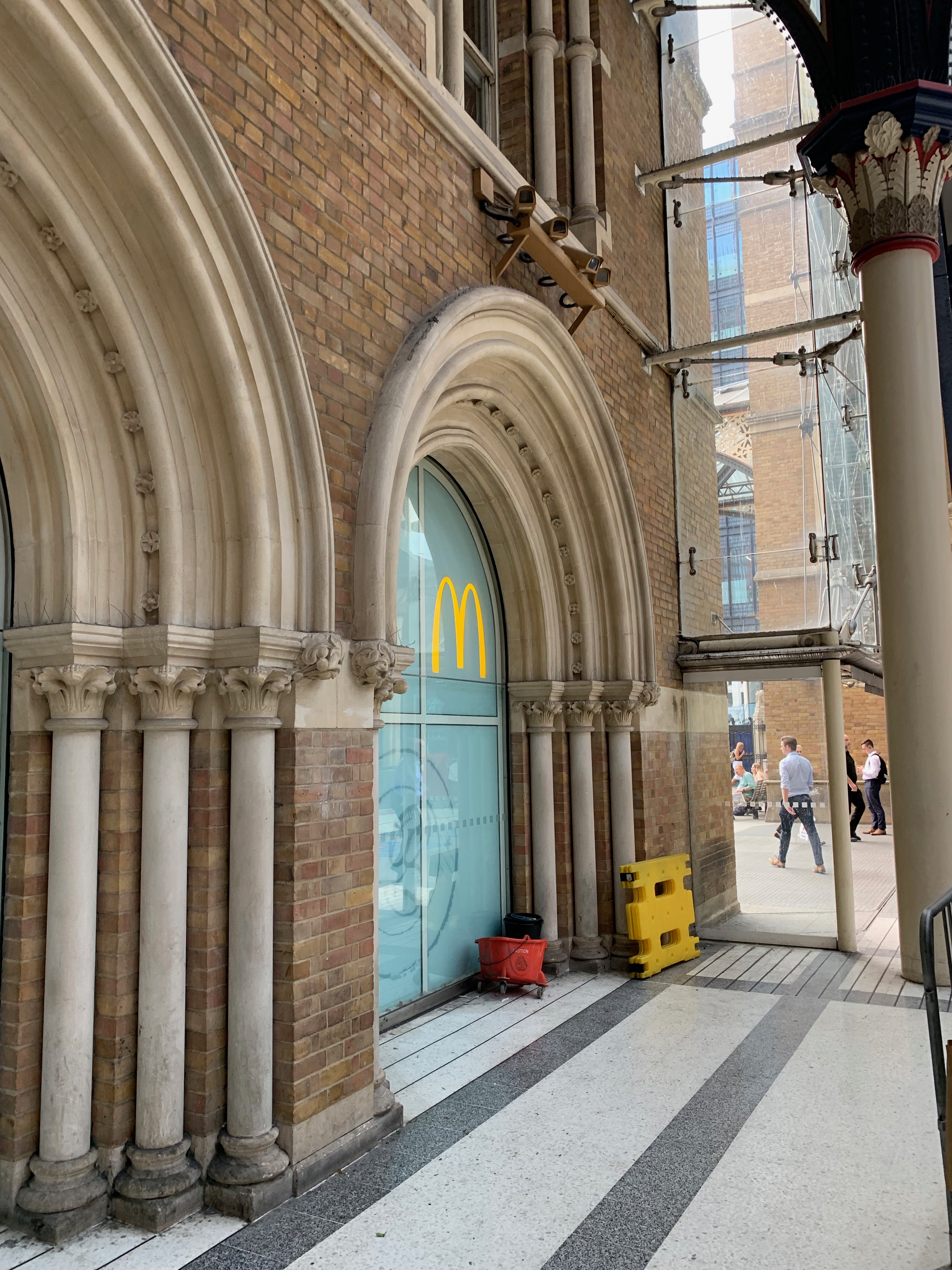
We visited multiple sites but the Liverpool train station stood out to me the most and I wanted to look into the thought process behind it further. The Liverpool Street Station area was one of these reformations of a mental institution. Upon entering the station area, I was confused by the difference in architecture. The building was a combination of metal pillars, mirror ceilings, and intricate brickwork combined with the contemporary architecture of the subway station. The building’s ceilings were very high and the station filled an extremely open space. The combination of past and present showed itself in an interesting way. I had seen a McDonalds at the station, which is pretty normal. But, the “M” insignia was imprinted into the glass of the brick facade of the building. Overall, it was very bright and clean; small store lined the walls of the building. 

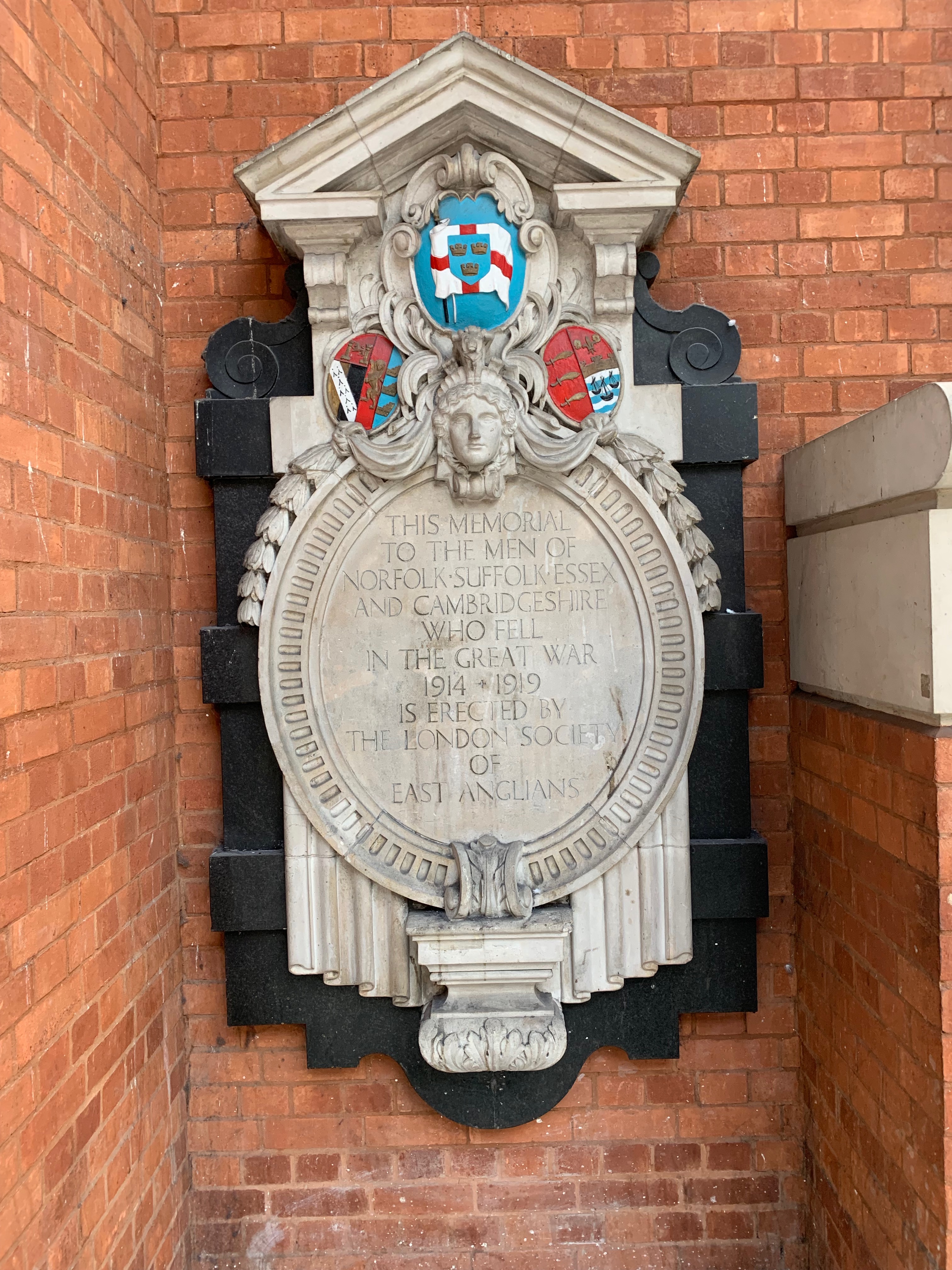
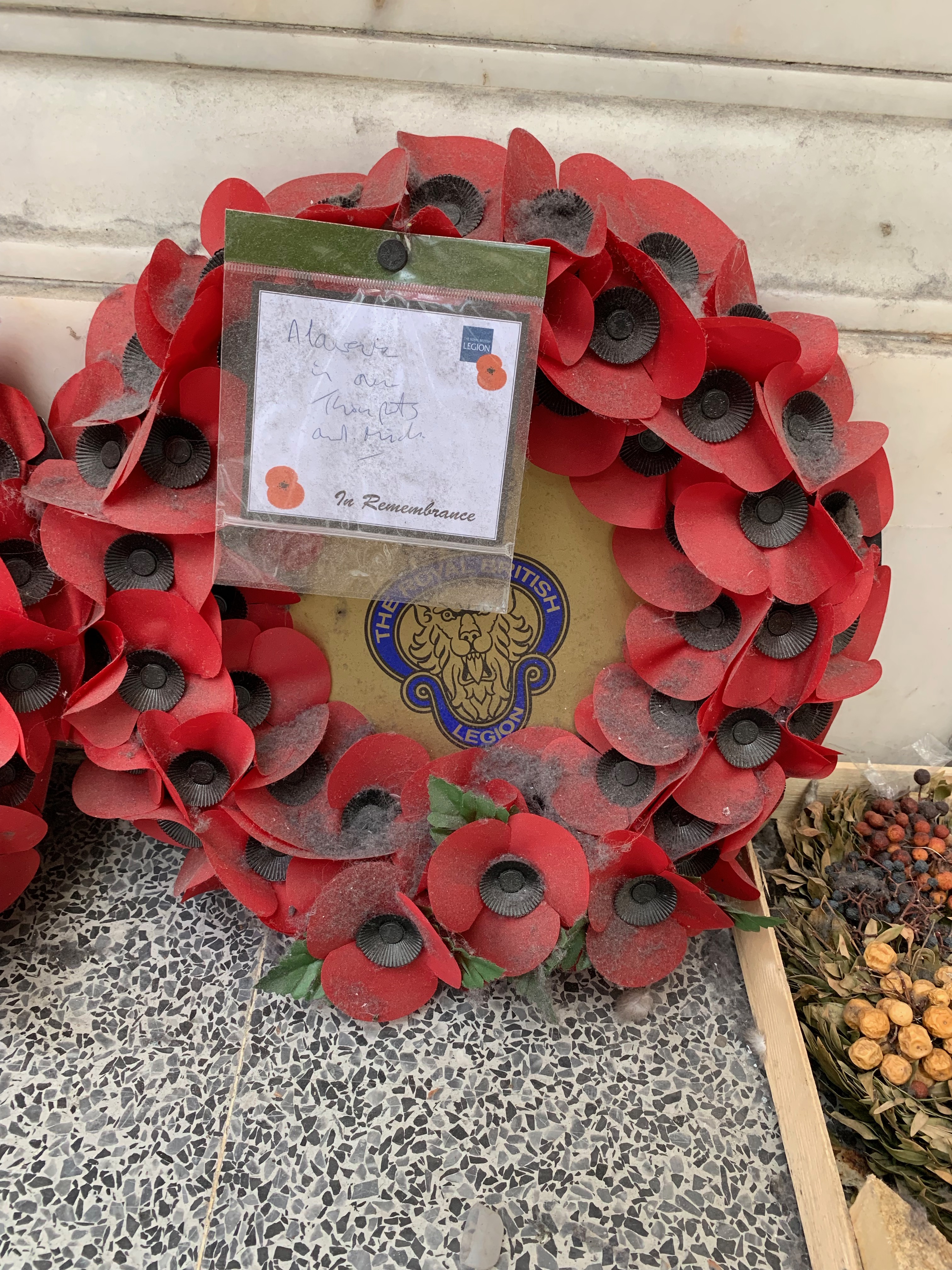
There were some indirect instances of the building’s history of erasure. While walking around the very busy station full of people running from stop to stop, I saw a plaque erected in honor of the veterans and sacrifices of the soldiers during World War I. There were red plastic wreaths of flowers on the floor of the sign. What was interesting was how the wreaths had notes written on them but they were all covered with dust. This, in reflection, described two things. One was that the history of the mental institution was replaced by the martyrdom of WWI and even that commemoration was collecting dust in the corner of the station. In Ackroyd’s text The City as Body, he discussed how “whether we consider London as a young man refreshed as risen from sleep, therefore, or whether we lament its condition as deformed giant, we must regard it as a human shape with its own laws and growth.” The history of the train station and its multiple purposes through time demonstrate the fluidity of the city as well as the change through erasure. The meaning or value of whatever was the past use of the building becomes equivalent to a plaque blocked by stores and respect covered in dust. This is even more relevant to the mental institute that the train station was built from. We had to find a plaque of the mental institute but it is only known because of its obscurity. 

The act of erasure functions superficially to progress society yet on a deeper level it functions to create a method of entertainment. The function of the shops in the station profits off of both the function of the space and the aesthetic history the building’s facade holds. Though this specific case discusses the stigma of mental illness and how discussing even its history is taboo, the idea of progress and erasure is interesting. We have destroyed the past to change the future, shown especially in the space we inhabit. It all begs the question of how we can balance the celebration of the past and the reinvention of the space for the future. I felt like the train station and other buildings visited in this assignment rejected the past pertaining to mental illness. Yet, there is so much back home which functions in the same flawed system of memorialization of only the positive to either further a capitalist regime or a nationalistic outlook. Hopefully we can work to better respect the history lost within the process of progress.

That’s Brutal Bro

For this assignment, we went to two brutalist buildings here in London, the Royal Festival Hall  and the Barbican social housing complex. Both buildings were interesting because they lacked any ornamentation like the buildings we saw in Vienna with the secessionist and historicist movement. This was especially intriguing because the British had borrowed the idea of social housing from Red Vienna as there was an influx of Viennese into London during the 20th century.

Looking at the buildings now, what is eye catching is not only the simple facade in comparison to the glass buildings and ornate stone work from past and contemporary styles but also the environment that the buildings foster. 

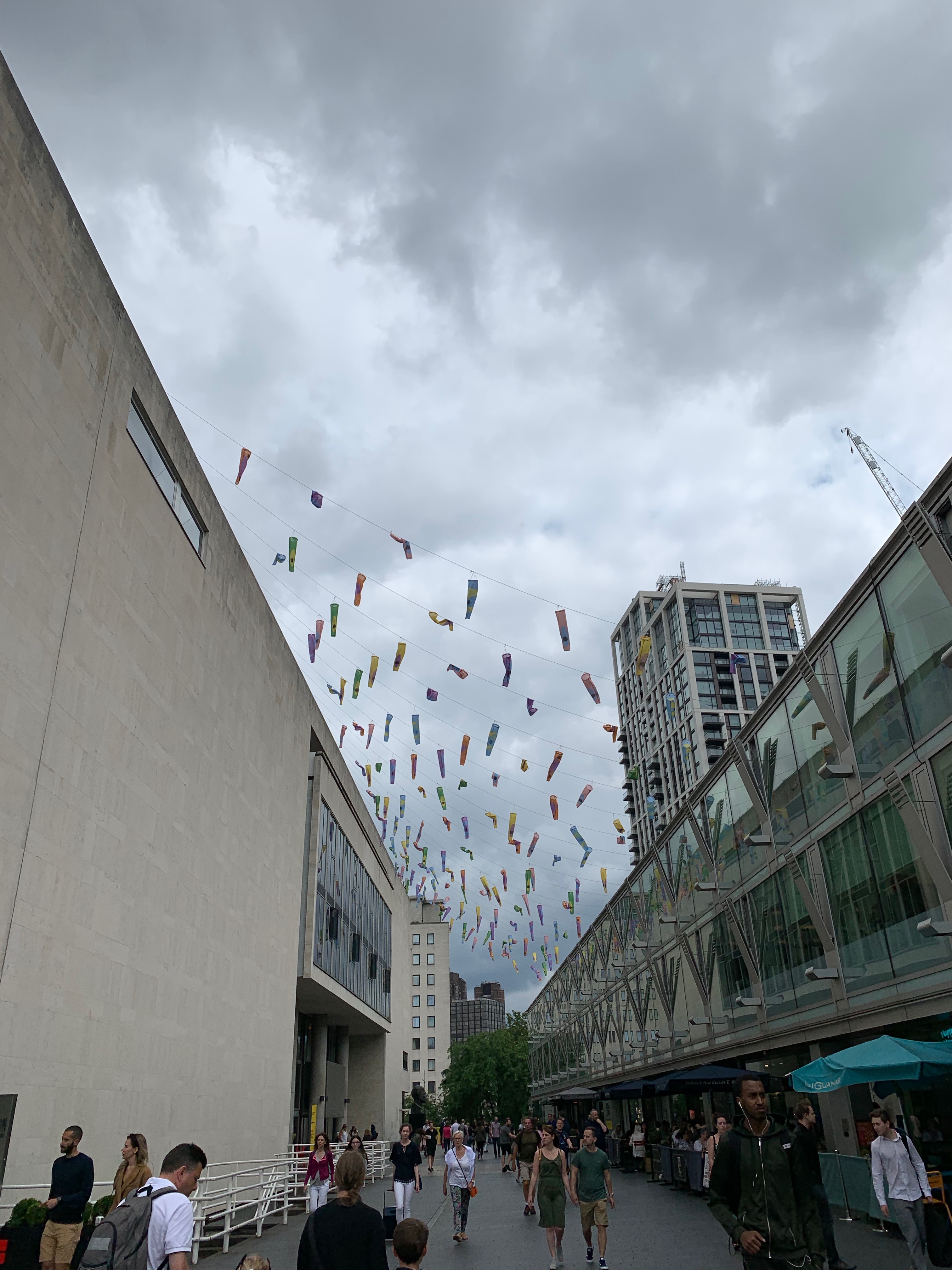
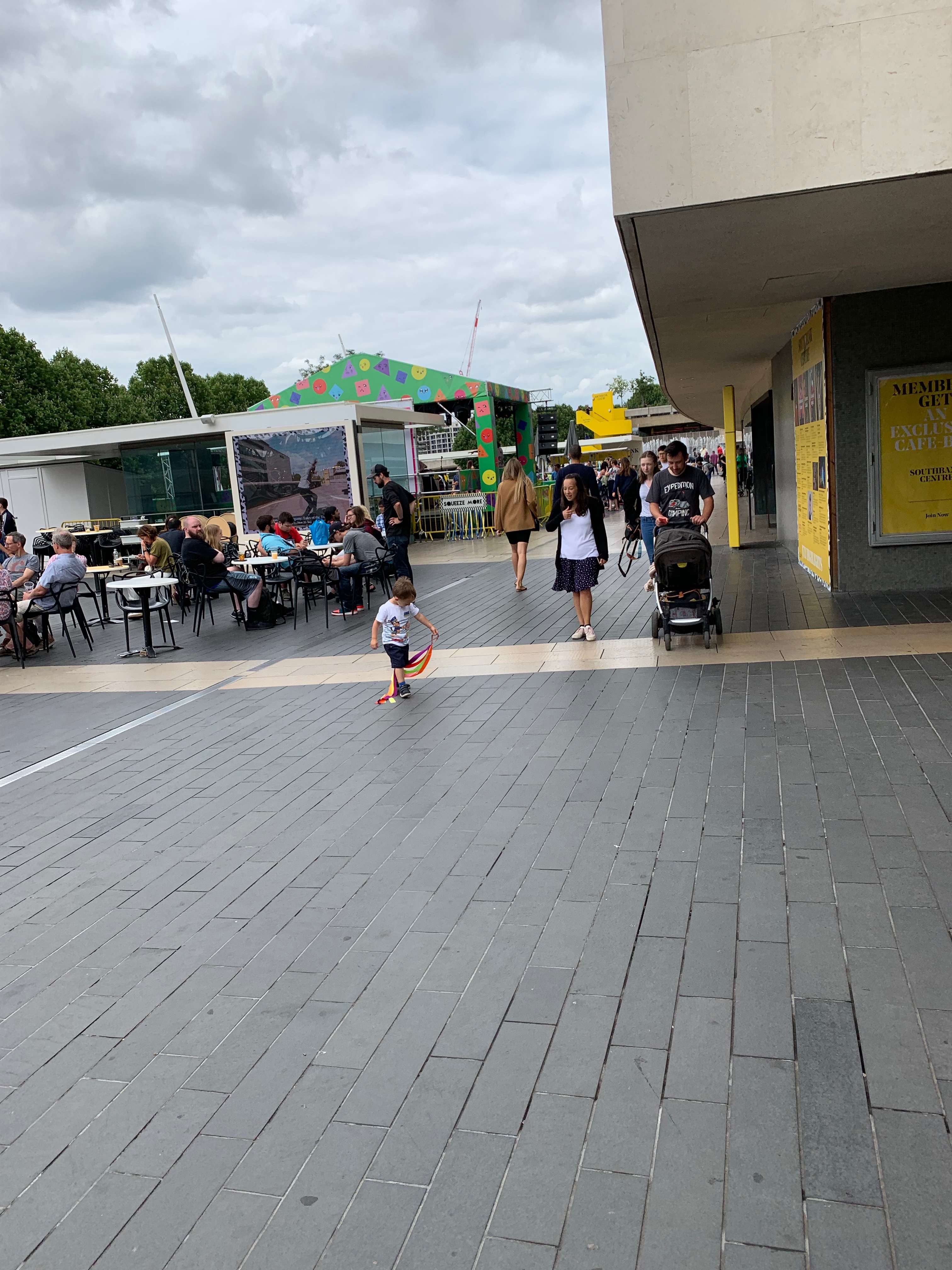
We had walked into the Royal Festival Hall not knowing what to expect. Looking around the building, there were these hanging lanterns in the sky. The building was made of mixed concrete and several levels. A kid was running alongside us with a twirling multicolored ribbon in his hand, showing the festival happening outside of the hall a little bit. When we walked in, there was a complete lack of designated space, everything was fluid. Something that caught my eye was how the floor was shifting its height as to create platforms throughout the first floor. There were also pseudo lower floors a couple stairs down creating the illusion of space. 

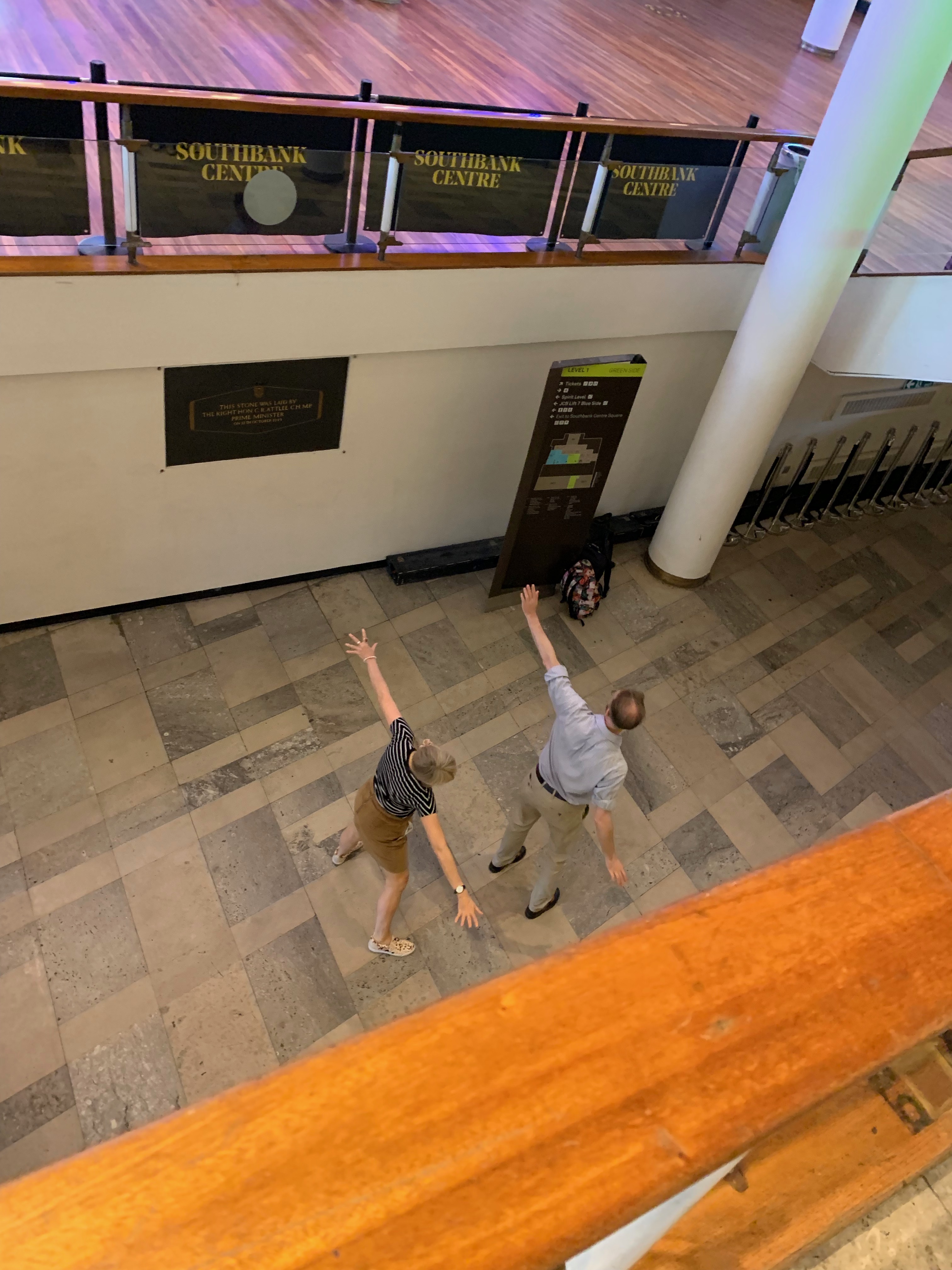
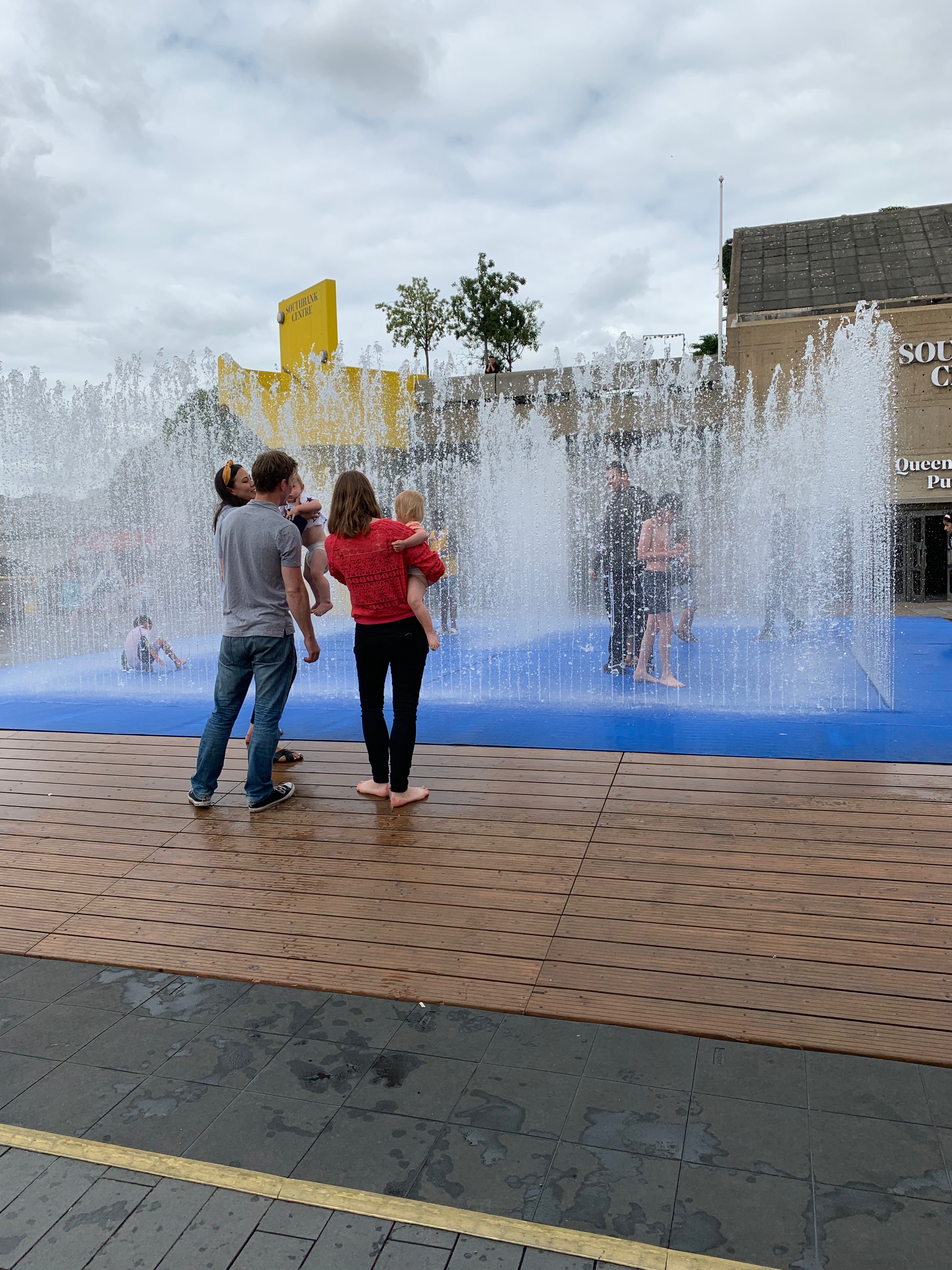
There was so much life in this building; it felt like air to walk through the building and see the hundreds of things happening. Peering over the ledge to a lower floor, I saw an older couple practicing a ballroom set. There were people bustled around the cafe area drinking coffee, working, and chatting with their friends. What was more fascinating was the festival outside, supposedly for pride. Children were at the floor of a concert, where an emphatic dj was playing out techno beats while the kids, with ribbons in hand, tried to hula hoop. There was also a water feature with water shooting out of holes in easily planned and followed formations where the kids would run between making sure not to get wet. 

Looking at this space is interesting, especially in the context of the spectacle. Adrian Forty described in the Unknown City how “in its efforts to reintroduce “experience” back into architecture, what has tended to appear is the simulacrum of experience: a spectacle, presented in literary or cinematic terms.” This spectacle becomes an outward celebration of the place, not just the building but the people who inhabit it. 

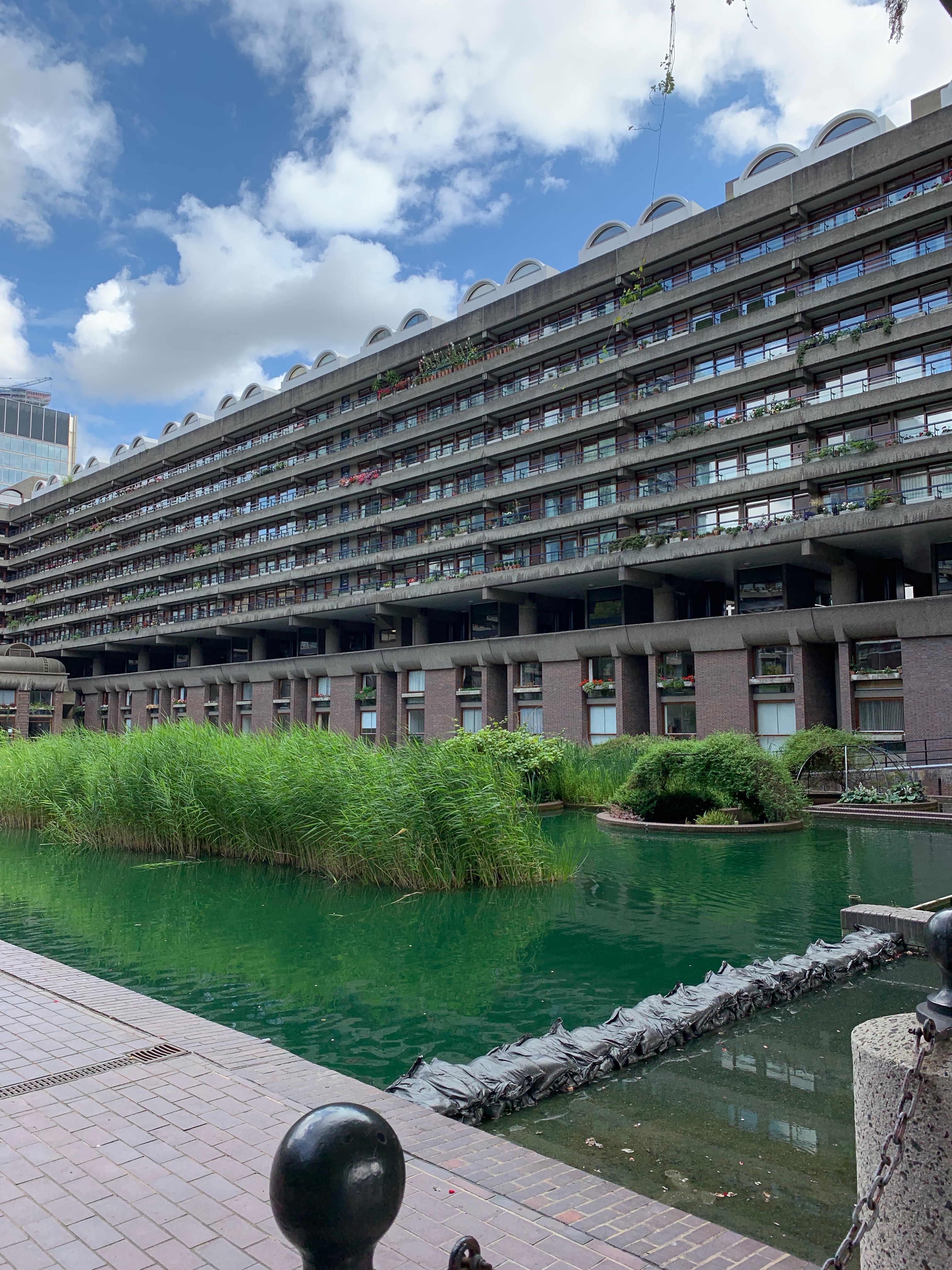
The Barbican had a similar act of spectacle. Though not a festival hall, the building now has become a gentrified hub for communal activities. The complex center was somewhat elusive; there were many streets and corridors where we could have gotten lost if we didn’t have navigation. The center itself was magnificent. Greenery everywhere, I had never seen anything like it. What was especially interesting was how the people congregated around the water, even though it had become solid from the lack of proper filtration. 

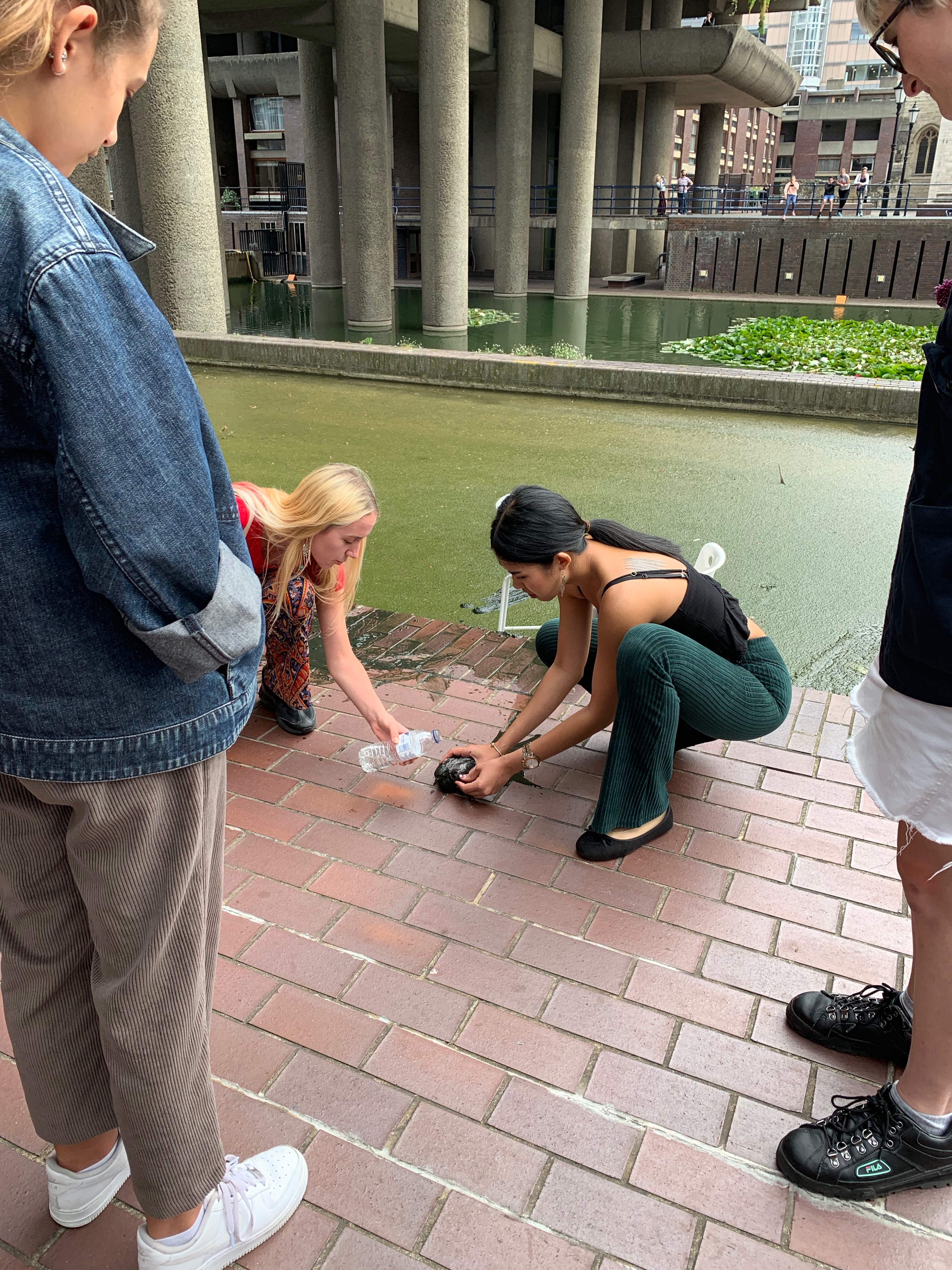
When we were there, a bird actually got stuck in the sludge and an entire group of people worked to clean the sticky debilitating material off of the bird. It was a sign of humanity and life within the community still thriving. There was still a feeling of the spectacle, the capitalization of the space for the community. But, the fact that it was gentrified, the prices skyrocketing in the area, was somewhat disheartening because that act took away the ability for lower income people to experience a sense of community and inclusion. This might be a further sign of the ongoing perseverance of classism in the country. 

Overall, it was interesting to see the translation of simplistic architecture into a communal experience to cherish. But, I feel it important to ask how and why this came about. Why would people gravitate towards these buildings when there is no unnecessary aesthetic value? I find that people appreciate these buildings because of their difference and access. The aesthetic buildings, like the monuments of this country, seem out of reach for people. Especially in the past, it was harder for lower class citizens to access or educate themselves with the tools necessary to properly appreciate the architecture. But, both the Barbican and the Royal Festival Hall functioned as a method to educate the public about the arts and the community associated with it. 

Social Housing Explorations

The buildings that we visited for the third CAT assignment were interesting because it marked a change in the time. Red Vienna was a huge part of modern Vienna, especially in the communist perspective towards equality and community. 

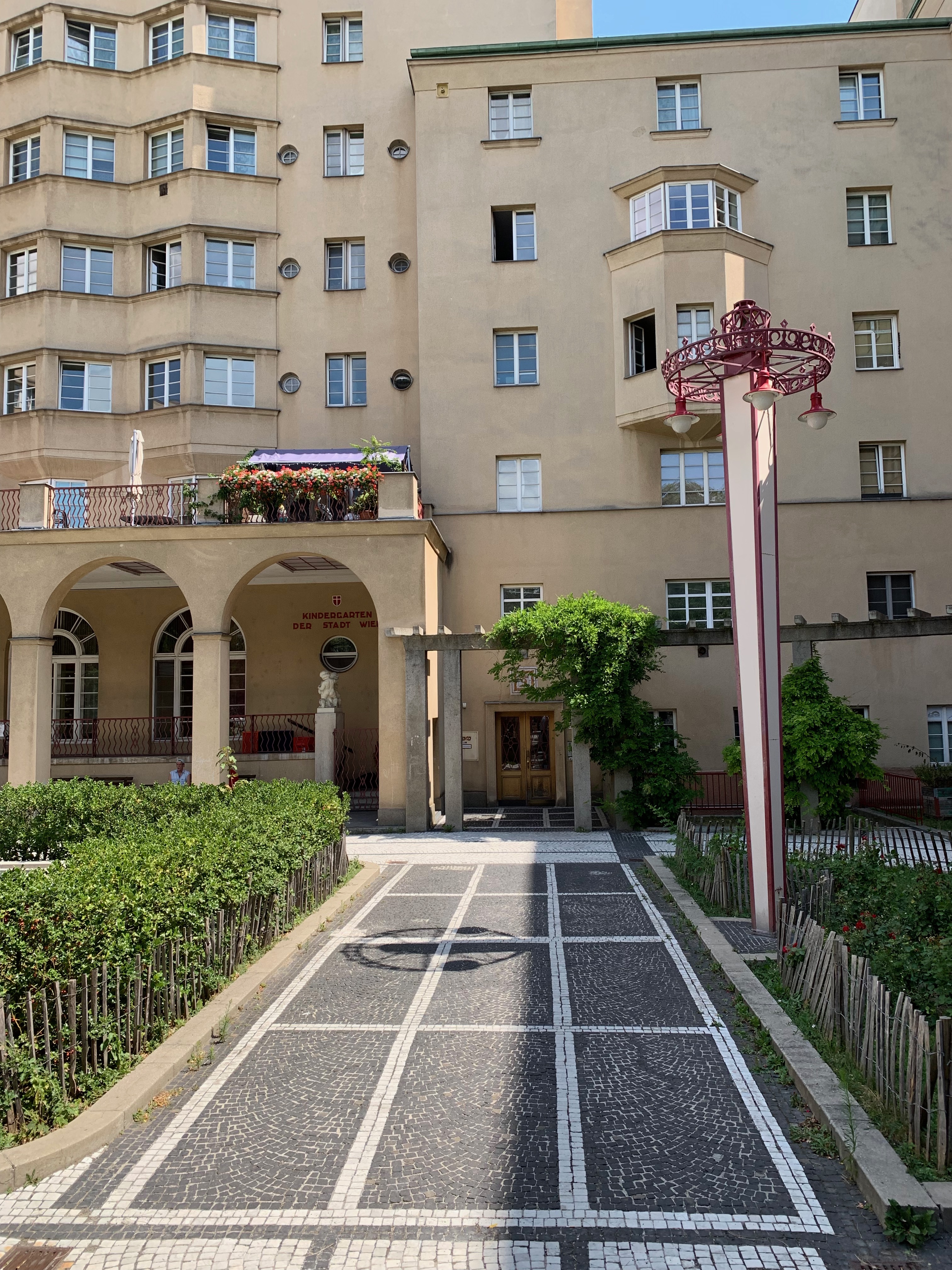
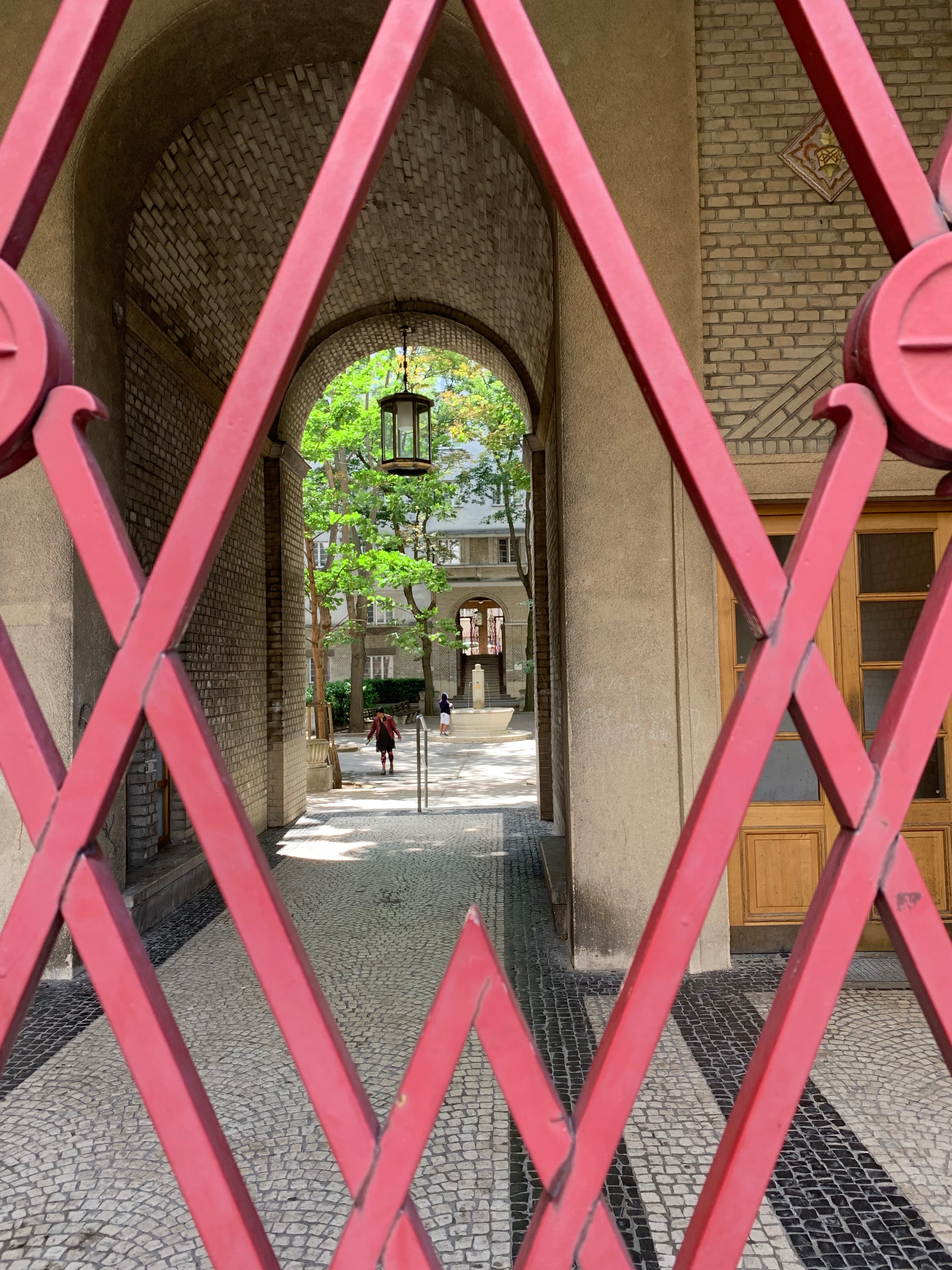
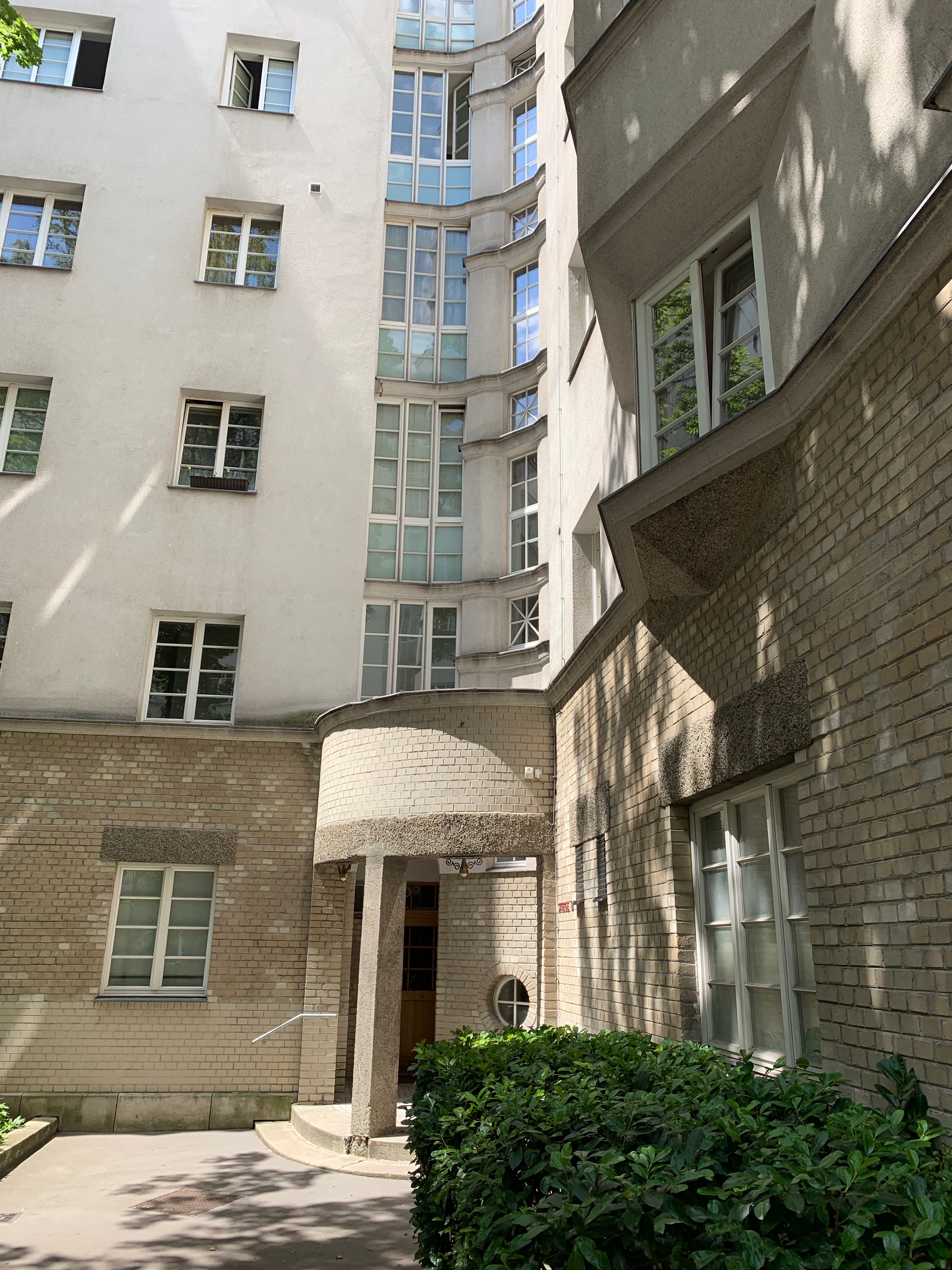
We had walked to Reumannhauf which is housing complex constructed  during that time. It was made to ensure opportunity for lower working class families who were affected by the instability from in and out of the country. Entering the open courtyard, there is a lot of greenery and a pathway leading to the children’s school in the center of the building complex. To the right and left of the main building, there are different complexes that are enclosed in bright red gates. Looking through the gates into a subsection of the complex, there was a mother and son sitting near the fountain in more secluded section of the courtyard. They were playing with the water while other residents walked around to and from their apartments going on with their daily  activities. The courtyard in the complex was extremely green, with vegetation surrounding the fountain and walkway, mimicking a natural habitat. The complex had a simple brick and white facade with windows all over the complex. 

When we were visiting the complex, there were two people sitting outside of the kindergarten in the premises. The fact that they were sitting there outside where there were children walking into the classroom was interesting because not only is this space still a living housing space but also it functions to help the people living in it through its services. The working school and communal areas, like the well-kept outdoor pool, shows how there is still a substantial effort to maintain and provide opportunities to the working class. 

Blau had discussed in her article “Re-visiting Red Vienna” how “the process was to be one of hineinwachsen, slow growth from within, by creating institutions that would prepare the working class culturally and intellectually for its historical role”. Looking at the Karl-Marx Hof and the Reumannhauf showed this realization of creating a slow growth bringing the working class to a position of power equal to the elite. (There was an interesting political cartoon in the Karl Marx Hof of this idea that I didn’t get a photo of but demonstrated this perfectly.)

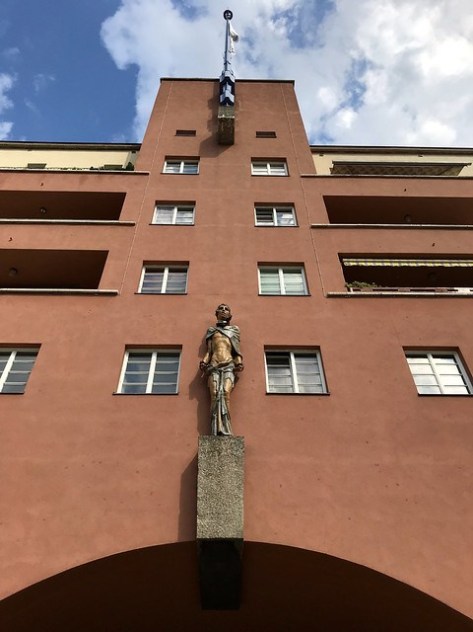
Visiting the Karl Marx Hof with a tour guide describing the intricate details to the facility and illuminating the thoughts of the people living there was a different experience to going to the other housing facility ourselves. Our tour guide had described how there was a motion to create solidarity in a new human by introducing access to education, freedom, fitness, and child care. It was especially interesting to see the smaller underpinnings of communist perspective towards the housing system and lifestyle. The tour guide was talking about some statues that were symbols of the ideas behind the housing system. One of the statues showed off the breaking of the chains of capitalism and the enforcement of equality. Everyone’s idea of communism is tainted to the extreme but seeing what the tour guide had to say showed how at its ideology, the communal aspect of communism was something to look towards as a goal of camaraderie. What struck me was how the oldest buildings had poles where people could put flags to celebrate both the working class and Vienna. But, the newer houses took down this addition, hinting at the shift in political and social perspectives in contemporary society. 

All of the information learnt at the tour and CAT assignment showed how they still hold to such great value the statues and ideas imprinted in the designed space. Reflecting on the US, there is a lot of government housing but the rates at which they are offered and the security they provide is lackluster. I did not get to see the complex in function during the night or without the disguise of a memorialized tour, but it seemed like there was a sense of nationalism and effort to keep up the work and ideas presented in the inception of the social housing movement in Red Vienna. I wonder how a more dedicated government system working towards a successful social housing program can affect the quality of life and nationalism in Arizona. 

A Re-Introduction

After looking at the city, there are small gems of difference embedded into the architecture around the city centers. Visiting the Looshaus, Secession building, and the Otto Wagner apartment complex showed the physical manifestation of the secessionist movement and its opposition.

We first the Looshaus, which is a bank across from the Hofburg Palace. The building is the same height but extremely different to its neighbors. The exterior facade is divided into two parts: the bottom covered in a dark grey and beige marble, swirling over the columns and entryway stairs. The top half of the facade is painted a light yellow and has rows of windows. There are flower beds at the bottom of the windows, forming the simplest type of decoration. 

Upon entry, the walls are covered with a dark mahogany wood panelling and gold accents. Though Loos, the architect and philosopher behind the building described the importance of the lack of ornamentation, the interior seems extremely lavish and upper echelon. Though it seemed expensive to be inside, the building did not relate to the historic style of the ringstrasse with ornate gold and plaster finishes. Instead, the building let the material speak, having decoration but not ornament. 

We had also visited the underground bathrooms constructed by Loos in the Ringstrasse, close to St. Stephen’s Cathedral. The bathrooms were small and embellished with similar interior features to the Looshaus. The stalls were made of wood and the handles and other accessories were made of gold or gold plate. There are small, frameless mirrors in each stall and a ceramic sink in the corner of each stall. Everything seemed to have a place, even though it seemed lavish, just like the Looshaus. 

The door handle especially peaked my interest because it was somewhat confusing. The design seemed over the top and somewhat unnecessary, the material seemed opulent, and it didn’t seem solely functional. Only from listening to class discussion did I realize that ornamentation is what is not necessary. Whatever you have and need can look however you want it, as long as you design it with intention and thought. This struck me because, as an architecture major, I am taught to be precise and observant about everything in my designs and have a cohesive work that serves a function for not only the community but the individual.   

Every aspect of functionalism is oriented around purpose and thought. Loos in his work, Ornament and Crime, mentioned that the design should have a meaning and use for the people. Otto Wagner, though, demonstrated a different perspective of secession. Wagner and the other secessionists functioned on a fluid perspective, looking at a changing world and making artwork and architecture accordingly. 

Visiting the naschmarkt on the way to Wagner’s apartment complex also was an interesting experience because it put everything in an extremely contemporary perspective. I had to take a moment to take in the intersection of the buildings around us and the local market. The building itself was beautiful, with an extremely intricate floral design and gold nature-inspired detail work. 

Looking at these buildings, I saw an emphasis of the ornament, or accessory. Some of the architectural decisions were only for aesthetic purposes. Yet, it makes for an extremely interesting facade, especially in comparison to the bright white building to the left of Wagner’s design. The first floor functions as a space for stores, but they are either closed down or look in bad condition, covered with street art. It was a little saddening as if the building’s significance was almost forgotten, not kept in pristine shape like we saw in the imperial palaces for the first assignment. 

The architecture of this assignment was interesting as it shows the beginning of a departure from old design methods and the forking of perspectives towards design and lifestyle in Vienna. I think it is interesting how everything was so controversial, especially through my contemporary perspective. 

Rolling around the Ringstrasse

Traveling through the Ringstrasse at first sight is overwhelming. Every direction you look is grandiose architecture and intricate details. There is an apparent effort to preserve the beauty of the history present when founding the country. Each palace is organized down to every room and artifact, memorializing the positive, and somewhat ignoring the negative. Frisby had quoted Marinetti in his text, “Otto Wagner and Vienna’s ‘Second’ Renaissance,” describing how technologies reshape how we see and experience a new urban landscape.” It was so interesting to me to see the interaction between the global importance of these historic landmarks and Viennese contemporary society.  

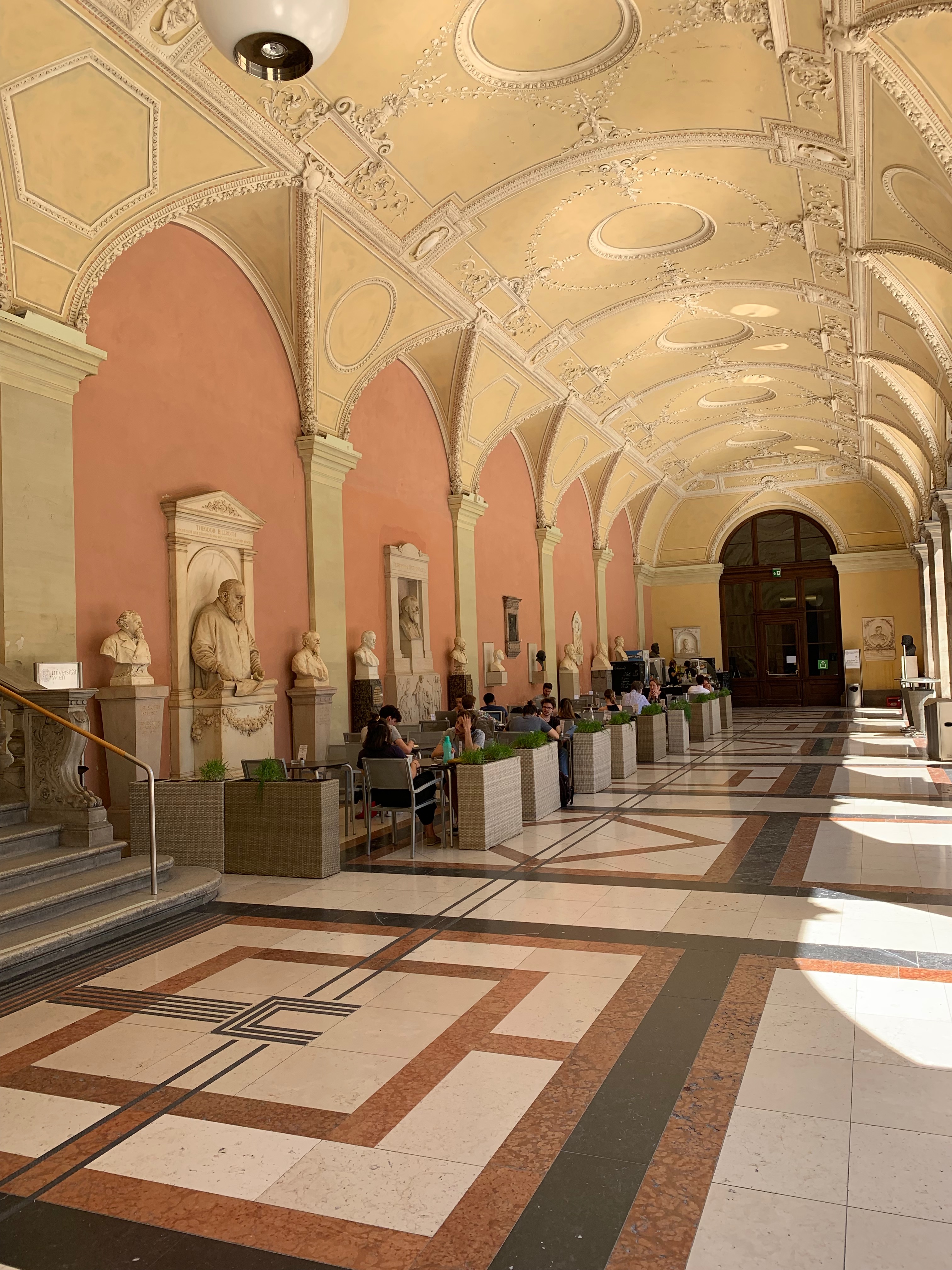
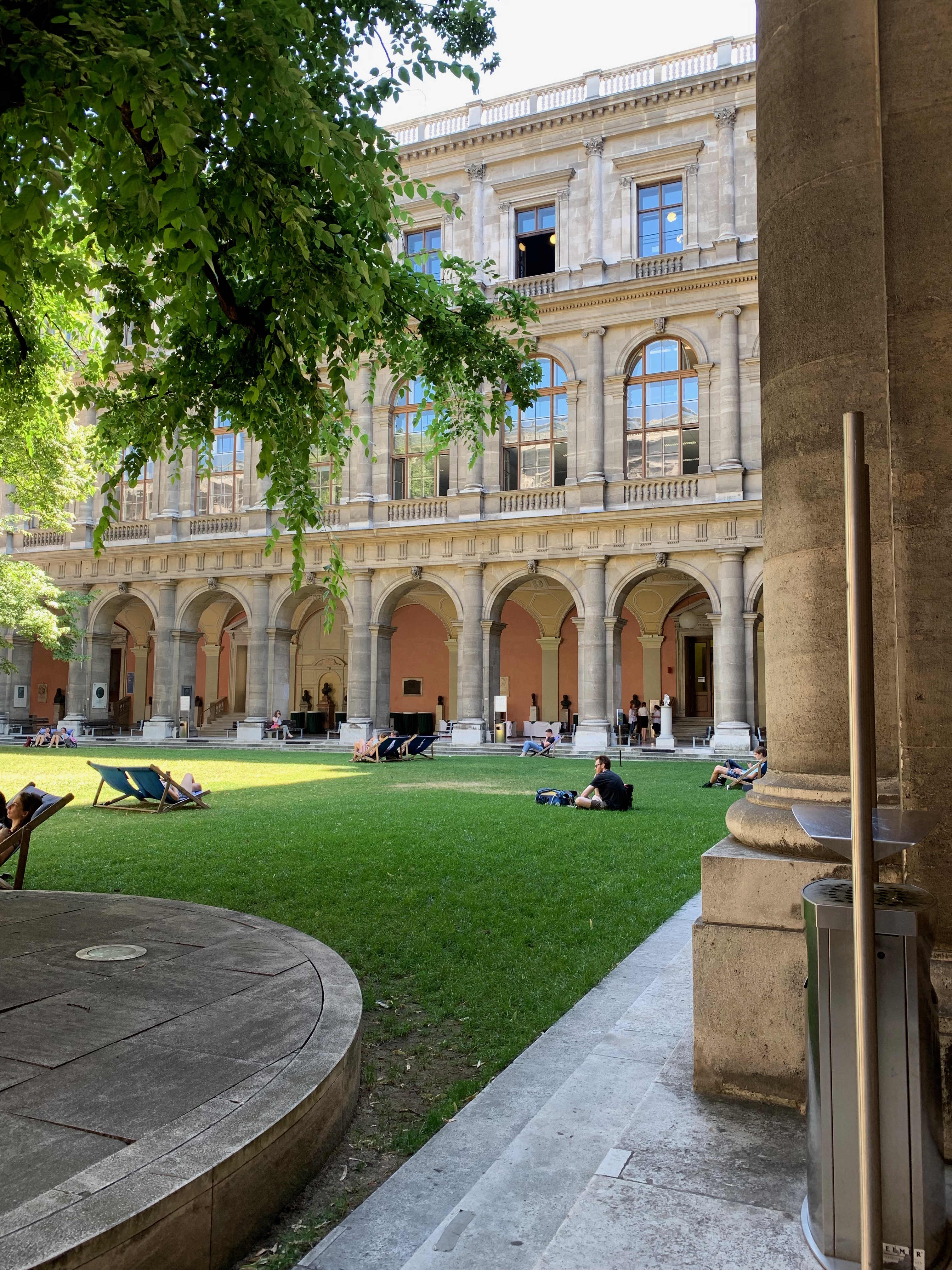
We had visited the University of Vienna where we saw a living, breathing moment in history. Walking up the stairs and entering the double-sided glass doors, the emblem of the university engraved onto it, we were immediately taken aback with the size and fantastical appearance of  the school. The ceilings made convex domes all adorned with ornate details. Walking around the school, each corridor looked like a museum, large arches and domes holding up the large lecture rooms and stairwells. We walked down the stairs and outside to see a large open courtyard in the center of the school. A large cafe was bustling with college students, all getting coffee and working on their computers. Looking out onto the courtyard, people were seated on lounging chairs enjoying homemade lunches and their friends company. We sat down at a bench and observed the relaxing environment. 

The university demonstrated the interesting conversation between present and past. On the one hand, the school seemed fantastical, something out of a fairy tale. But, seeing the cafe and the people lounging around the campus brought it to life. Another interesting point is how people subconsciously exhibit nationalistic perspectives through bringing these historic landmarks to life. 

St. Charles Church also showed this same interaction between present and past. As we walked outside the U-bahn terminal and past the park just outside the church, we saw a man laying in the sun, sunbathing with nothing but a pair of shorts. It was interesting to see such a nonchalant activity outside of one of the most historically significant locations in Vienna (both representing the St. Charles Borromeo and Charles VI, an emperor of Austria). 

Walking into the church was an out of body experience. Every corner of the church was embellished with beautiful religious motifs, gold-leaf covered ornaments. People were sitting and praying. I also saw a couple on their phone in the back, chatting in German. When I looked above, there were two large reflective orbs covering the top of the dome and a large elevator, taking up a quarter of the church. 

These two additions at first confused and frustrated me. Why would people want to cover up something historically so beautiful with something so modern and contemporary. But, upon reflection, it was interesting to see that interaction between the times. The additions added to the experience of the church. One of the people who had worked there said that, “the installation was put in to see the reflection and give another dimension of experience to the sermons.” The elevator also gave access to a space that would have only been distant to the lacking eye. The installations provided a different perspective for the experiences that the church had offered for centuries. 

The city is a historical artifact, showing the beauty and opulence of the western past. But, it is still a living city, constantly adapting to its surroundings. The fact of use alone becomes a possibility to show nationalism and pride in their past by still using the space today. 

Design a site like this with WordPress.com
Get started